Germany Commits €1.3B to India for Climate, Energy Goals
- Germany commits €1.3 billion in concessional loans to India for climate, energy, urban development, and renewable energy projects
- The partnership strengthens bilateral cooperation under the Green and Sustainable Development Partnership (GSDP)
- Notable projects include the Yellow Line Metro in Bangalore, supported by a €340 million loan
Recently, Germany announced that it would provide approximately €1.3 billion in concessional loans to India, mainly for a variety of projects addressing environmental/energy issues, sustainable cities and towns, creating clean urban transportation systems, managing natural resources, etc.
Through these and similar projects, both Governments intend to strengthen their bilateral relationship by enhancing co-operation in areas such as developing renewable sources of electricity and providing training and education in the area of energy technology.
According to the official statement, the recent conclusion of the 'Indo-German Government Negotiations on Development Cooperation 2025' confirmed the importance of a long-term, strategic partnership between India and Germany, which has been established through the Green and Sustainable Development Partnership (GSDP).
The statement read, “During the negotiations, Germany announced new commitments amounting to almost €1.3 billion, primarily in the form of concessional loans, across the key areas of climate and energy, sustainable urban development, green urban mobility, and sustainable management of natural resources. In addition, bilateral cooperation in the skills development sector, in particular, renewable energy will be strengthened”.
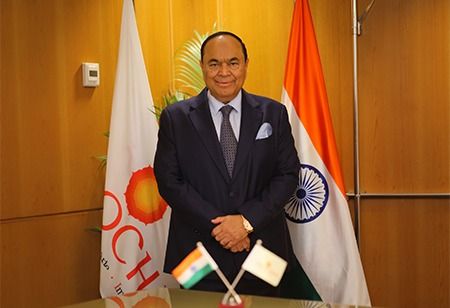
Christine Toetzke (Director General – Asia) from the German Federal Ministry for Economic Cooperation and Development stated that India continues to be a strong partner for Germany under this new Government.
Also Read: VinFast to Invest $500m to Expand Tamil Nadu EV manufacturing
“I am delighted to continue our trustful development cooperation- under the umbrella of GSDP, guiding our commitment to the bilateral cooperation. With the projects committed today, Germany and India jointly follow the path to sustainable prosperity and overcome global challenges”, he added.
Philipp Ackermann (Ambassador of Germany to India) commented on the unique aspects of GSDP co-operation.
He noted, “Our negotiations under the Green and Sustainable Development Partnership are serious in purpose but deeply rewarding, because they take place with partners we know well and value greatly. Germany has no partnership quite like the GSDP with any other country (apart from India), its scale, its ambition, and its spirit of equal collaboration make it truly unique. It is not traditional development cooperation; it is two mature nations working together to find solutions to the most pressing challenges of our time. I am very pleased that we were able to conclude the negotiations efficiently, and I look forward to the important work we will take forward together in the coming year”.
As part of the Indo-German partnership, a priority is to improve low carbon, safe and inexpensive urban transport for all. An example of this collaboration is the Yellow Line Metro Project in Bangalore, which has received €340 million of funding from KfW, the German Development Bank.
The Metro will provide enhanced urban transport for residents and visitors to Bangalore; it will help reduce greenhouse gas emissions and has already created 25,000 jobs, with leading German companies such as Siemens and Knorr-Bremse providing critical operational support to the project.
In addition to being a key example of Indo-German collaboration, the Bangalore Living Lab also serves as another example of a successful partnership driving climate-friendly innovation through the Living Lab's development of India's first rooftop solar-powered EV charging station.