India Launches ₹450.6 Billion Plan to Aid Exporters Hit by US Tariffs
- India allocates ₹450.6 billion support package protecting exporters from U.S. tariffs.
- Scheme includes ₹200 billion credit guarantees and ₹250.6 billion for trade-finance, export promotion.
- Targeting labour-intensive sectors and export diversification amidst 50 % U.S. tariffs on Indian goods.
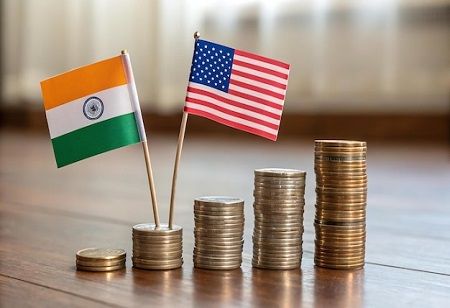
India’s cabinet has approved a ₹450.6 billion (approximately US $5.1 billion) export-support package to cushion the blow from newly imposed U.S. tariffs on Indian goods. The scheme comprises two major components: one offering ₹200 billion in credit guarantees for collateral-free loans to exporters, and another allocating ₹250.6 billion over six years for affordable trade finance, export promotion, and logistics support.
The timetable comes as the U.S. has slapped tariffs of up to 50 percent on a wide array of Indian exports, including garments, jewellery, leather goods, and chemicals and engineering items, citing India’s continued oil imports from Russia among other issues.
These steep duties threaten India’s competitiveness in its largest export market, with some estimates showing Indian goods now facing significant cost disadvantages against rivals such as Vietnam, China, and Bangladesh.
In response, the support package aims to assist especially small- and medium-sized exporters struggling with tighter margins, financing pressures, and the urgent need to diversify into new markets. The credit guarantee scheme will allow loans up to ₹500 million per exporter, without collateral, under the first component. Meanwhile, the second arm of funding is designed to strengthen export infrastructure from logistics and warehousing to branding and compliance, and to open avenues into less traditional markets beyond the U.S.
Also Read: India, Mauritius to Boost Ties in Ocean Tech and Blue Economy
The government emphasised that while the tariff shock is severe, it does not anticipate a long-term structural loss from the U.S. tariffs, and is doubling down on boosting export resilience. Nevertheless, labour-intensive sectors such as textiles, apparel, leather, gems & jewellery, and seafood are seen as the most vulnerable, given their narrow profit margins and high exposure to U.S. import duties.
By front-loading relief and deploying a multi-year export-mission strategy, India intends not only to mitigate immediate tariff shocks but also to reposition its exporters to compete more strongly in diversified global markets. The government expects this dual focus of relief plus market diversification to help sustain export growth despite the challenging trade headwinds.