Space Sector to Play Major Role in India's Economic Growth: MoS
- Space economy: $8B now, $44-45B in next decade
- 2023 policy enables NGEs, boosts FDI in space
- GatiShakti aids infra; GSAT-9 serves neighbors
India's space sector is almost like a new major economic driver for the country. Jitendra Singh, Union Minister of State for Science & Technology, was quite clear that the reforms being carried out are accelerating its growth by several folds and also making it a point of reference in the world. While addressing the India International Space Conclave, Sing attributed the change to Indian Space Policy 2023, which has transformed the industry from a small, government-dominated domain—once ignored in economic calculations to a dynamic ecosystem worth $8 billion today.
The space economy is expected to reach $44-45 billion in the next ten years with substantial private sector participation and foreign collaborations that will open up new frontiers for innovation and investment. Without a doubt, the introduction of non-government entities (NGEs) in the space sector and allowing them to have a full-fledged participation—from satellite missions to data applications was the most important and revolutionary aspect of the policy.
Also Read: L&T, BEL Onboard Dynamatic for AMCA Fighter Project
To complement this, changes made to the foreign direct investment (FDI) framework have paved the way for more inflow of capital in areas such as satellite manufacturing, launch services, and ground operations thus getting on-board global leaders and fostering startup ecosystems. Singh emphasized that almost 70% of space-derived technologies in India focus on the welfare of the society and elevate the quality of life of citizens considerably with means such as the GatiShakti portal—an advanced infrastructure planning, execution, monitoring, and maintenance platform—which, besides other countries, has also been lauded by Bangladesh.
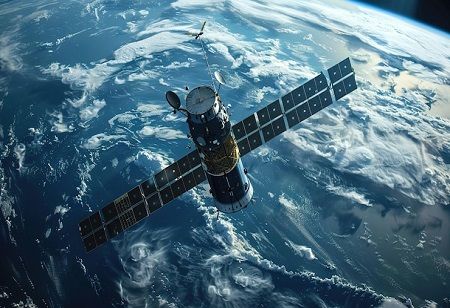
Several recent measures demonstrate that the emphasis here is on meeting the needs of the people: the PM Gati Shakti portal has been opened for private-sector participation to facilitate last-mile logistics and infrastructure projects, while the Swamitva scheme uses space technology for accurately mapping rural lands. The use of space-based communicational technologies is enabling telemedicine, disaster management, and the creation of new jobs for rural youth. India is extending its regional goodwill through satellites like GSAT-9 the South Asia Satellite that, despite a boycott of the wider SAARC cooperation by Pakistan, provides necessary services to Bhutan, the Maldives, Sri Lanka, Nepal, and Myanmar.