.jpg)
Budget 2026 Watch: Industry Sector Expectations
As Budget 2026 draws closer, the industrial sector is looking to the Finance Minister for policies that can strengthen manufacturing competitiveness, improve ease of doing business, and accelerate sustainable growth. From core industries and MSMEs to advanced manufacturing and supply chains, expectations centre on infrastructure investment, cost efficiencies, and access to capital. Industry leaders are also seeking clarity on taxation, logistics, and energy transition to support long-term planning. With India positioning itself as a global manufacturing and production hub, Budget 2026 has the potential to unlock scale, resilience, and innovation across industries, driving job creation and economic momentum nationwide.
Rajesh Kaushal, Energy Infrastructure & Industrial Solutions (EIS) Business Group Head, India & SAARC, Delta Electronics India
 India’s energy transition is advancing faster than ever. We added a record ~44.5 GW of renewable capacity in 2025, nearly doubling year-on-year growth, and crossed 50% of total installed capacity from non-fossil sources, years ahead of schedule. This momentum shows the direction: clean energy must be paired with resilient infrastructure. As renewable penetration rises, reliable power delivery will increasingly depend on battery energy storage, advanced power electronics, and grid-ready conversion technologies that can stabilize the network and manage variability in real time. In the upcoming Union Budget, we look forward to policy frameworks that recognize energy storage and power electronics as essential grid assets, support deep localization of manufacturing, and provide long-term policy visibility for investors. These enablers are critical if India is to move from adding capacity to building true energy capability for a secure, future-ready power ecosystem.
Seema Prem, Co-founder & CEO, FIA Global
 Public spending could complement private AI investment to increase rural banking productivity. Budgetary support through grants, co-investment funds, or guarantees can accelerate adoption of AI for vernacular interfaces, fraud detection, and alternative credit models for financial services’ delivery in rural areas.
To accelerate AI’s reach in Bharat, the Budget could provide for funding shared intelligence, not isolated pilots—AI that makes the Bank Mitra channel cheaper to run, safer to trust, and easier for customers to use. This requires targeted public investment in common AI rails such as vernacular voice interfaces, real-time fraud and grievance intelligence, and alternative credit and cash-flow models tailored for rural livelihoods.
The Budget could empower NABARD to support the Bank Mitra ecosystem with AI adoption, shared data platforms, and partnerships with cooperative banks, Regional Rural Banks, and State Rural Livelihood Missions.
Jayesh Rajpurohit, Co-Founder and CEO of Brick & Bolt
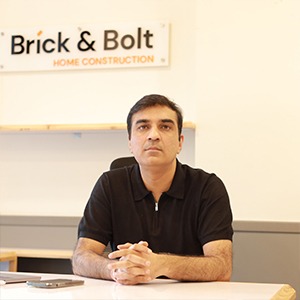 India’s real estate sector is on track to become a USD 1 trillion industry by 2030, contributing nearly 13% to GDP and supporting over 70 million livelihoods. However, there are several challenges that are hampering the growth of the sector. Rising land prices, construction inflation, and a complex tax regime have stretched affordability, especially for mid-income homebuyers.
Ahead of the Union Budget, the sector could benefit from rationalisation of GST on under-construction homes and raw materials, along with reinstating tax relief for affordable housing, will allow developers to improve viability without passing costs on to end-users.
Additionally, considering the recent challenge of air pollution caused due to construction processes, incentivizing a shift to steel and precast structures over the current Reinforced Concrete (RC) mixtures, would help real estate developers adopt cleaner construction processes.
Uniform stamp duty across states, enhanced home loan tax benefits, industry status for real estate, and easier access to long-term, low-cost capital are critical to boosting demand and investor confidence. Further, clearer taxation, single-window approvals, support for rental and mixed-use developments, and sustained focus on urban infrastructure and transport connectivity—particularly in Tier II and Tier III, will help build employment hubs.
With this support, the sector can unlock sustainable growth while strengthening homebuyer confidence and long-term livability.
Dr. Sanjeev Srivastava, Head of Industrial Automation, Delta Electronics India
 Industrial automation is a key growth lever for India’s manufacturing competitiveness as the economy scales towards the $5-trillion milestone. Smart factories, AI-driven automation, and human-machine collaboration will be central to this transition.
Ahead of the budget, stronger support for smart manufacturing incentives, R&D tax benefits, and skill-development programs will help industries adopt next-generation technologies faster. These measures will improve efficiency, lower costs, and strengthen India’s position on the global manufacturing and automation curve.
Sudarshan Lodha, Co-Founder & CEO, Strata
 Over the last few Budgets, the government has laid a strong foundation for commercial real estate through infrastructure investment, urban development programs, and capital-market reforms such as REITs and asset monetisation.
As we look to Union Budget 2026–27, the next phase should focus on easing project-level financing, enabling structured private credit, and providing clearer tax and regulatory frameworks for alternative investment platforms.
These measures can unlock long-term capital, support office expansion beyond core metros, and strengthen real estate’s role in employment and urban growth.
Vamsi Vikas, Founder and Managing Director of Raghu Vamsi Aerospace Group
 India today does not suffer from a lack of intent or ambition in defence manufacturing. Over the years, industry has developed meaningful capabilities, created robust infrastructure, and nurtured specialised talent aligned with clearly identified defence priorities. What now requires equal attention is the sustainability of this ecosystem as it moves from promise to performance.
The cost and risk borne by industry in taking a technology beyond early production are often underestimated. From practical experience, the most fragile phase of any defenceprogramme is the transition from initial production to scale. This is the stage at which development timelines tend to stretch, costs escalate due to refinements and testing, and programme momentum can weaken.
Similarly, capital investments made by industry in defence manufacturing are inherently long term in nature and expenditure is uneven across budget cycles. Hence disrupts capacity planning, quality systems, compliances, and after-sales support though the overall budget allocation appears stable.
On the exports front, there is today genuine global interest in sourcing defence systems from India. However, exporting defence equipment cannot be treated as an extension of domestic procurement. To be credible in international markets, industry must invest upfront in regulatory compliance, certifications, disciplined documentation practices, and long-term maintenance and support infrastructure.
Sanjay Choudhari, Chairman, SBL Energy
 The forthcoming Union Budget 2026 calls for a transformative opportunity to substantially boost India's infrastructure and mining sectors. We strongly anticipate strong initiatives that indicate significant capital investment into large-scale projects, incentivise the adoption of innovative green technology, and rationalise duties on critical materials to reduce cost constraints.
Besides this, streamlined regulatory frameworks, like single-window approvals, are critical for promoting ease of doing business and unlocking private investment. Such forward-thinking changes would spur innovation, boost global competitiveness, and establish India as a leader in long-term industrial growth. A visionary budget would not only stimulate economic growth, but will also strengthen the country's commitment to resilience, self-reliance, and environmental care.
Nitin Jain, Joint Managing Director, Concord Control Systems Limited
 As we approach the Union Budget FY27, the Indian rail and mobility ecosystem stands at a critical inflection point where scale, safety, and sustainability must advance together. Continued and enhanced capital allocation towards railway modernisation, indigenous technology development, and next-generation propulsion systems will be essential to meet India’s long-term freight and passenger mobility goals. Focused support for safety-critical systems, automation, and digitalisation will further strengthen operational efficiency across the rail network.
From an industry perspective, targeted incentives for domestic manufacturing of high-value electronics, embedded systems, and clean mobility solutions along with support for hydrogen and alternative energy adoption, will accelerate innovation while reducing import dependence. Policy clarity on long-term procurement, faster approvals for advanced technologies, and strengthened R&D incentives will enable companies like ours to invest with greater confidence in globally competitive solutions developed in India.
We appreciate the government’s sustained commitment to infrastructure-led growth and the ‘Make in India’ vision, which has empowered Indian companies to deliver world-class, mission-critical technologies. With continued policy support in FY27, the industry is well-positioned to contribute meaningfully to India’s ambitions of safer railways, greener transportation, and leadership in future mobility solutions.
Pankaj Singh, Head of Data Centre & Telecom Business Solutions at Delta Electronics India
 As India moves deeper into the 5G, cloud, and AI era, mission-critical digital infrastructure is fast becoming the backbone of every industry. In the upcoming budget, energy-efficient and resilient data centre ecosystems must be a clear priority.
Stronger incentives for modular and containerised data centre deployments will accelerate the rollout of scalable core and edge facilities, while support for advanced cooling technologies, including liquid-to-liquid and liquid-to-air coolant distribution systems is essential to manage the high heat loads of AI-driven workloads.
Complementing this with sustainability-linked benefits and Make-in-India incentives for locally manufactured power, cooling, and automation equipment will help OEMs invest with confidence and build a future-ready digital backbone that is both low-carbon and globally competitive.
Saket Gaurav, CMD, Elista
 As India approaches the Union Budget 2026–27, the electronics sector stands at a critical inflection point. Global supply chains are being reshaped, and countries that can offer scale, stability, and cost competitiveness will define the next phase of manufacturing. India has made encouraging progress, and recent GST reforms, particularly in categories like televisions, have helped improve cost efficiency and accelerate domestic production.
Electronics is a power-lifter sector for India. The next step is policy continuity with deeper support for local value addition and support for affordable consumption at home. Simplified tariffs, predictable incentive disbursements, and sustained investment in skills, component ecosystems and applied R&D can significantly reduce friction at the factory level and enable long-term planning.
As manufacturers, we are also expecting the government to enhance support to compete more effectively on the global stage, which would strengthen the 'Made in India' brand in international markets.
Manish Agarwal, Managing Director, Satya Group, President, CREDAI Haryana
 Luxury homebuyers are entering 2026 with significantly evolved expectations, seeking not just premium residences but curated, investment-grade living experiences. As the Budget approaches, we urge the government to consider measures that will enhance capital availability, streamline the regulatory environment for high-value transactions, and actively encourage the structure of fractional investments in marquee assets.
These strategic steps are vital to democratize access to luxury homeownership, fuel demand for ultra-premium developments, and solidify India's position as one of the world's fastest-growing luxury real estate ecosystems.
Ankush Kaul, President – Sales, Marketing & CRM, Central Park
 As the luxury housing segment moves into a more mature phase in 2026, the upcoming Union Budget has an opportunity to reinforce growth through targeted, market-aligned reforms. The industry looks forward to rationalisation of transaction costs, clearer GST benefit transmission, and incentives that support high-quality, sustainable development.
While continued focus on affordable housing and urban infrastructure is essential for overall sector momentum, calibrated measures that recognise the luxury segment’s ability to attract long-term domestic and global capital will further strengthen India’s positioning as a credible, global luxury real estate market.”
Madhumita Agrawal, Founder & CEO of Oben Electric
 Oben Electric views the Union Budget 2026-27 as a vital opportunity to strengthen India’s electric mobility journey. While 2025 was a landmark year with EV sales reaching a record 2.3 million units, anchored by 1.28 million two-wheelers, the industry’s long-term health depends on structural tax reforms. A primary concern for domestic manufacturers is the inverted tax structure. While finished EVs attract a 5% GST, the raw materials sourced to build these vehicles are taxed at 18%. This 13% disparity traps vital working capital across the industry, driving up production costs and straining liquidity.
Aligning the GST on all EV components to a uniform 5% is essential to support domestic manufacturing and make 'Make-in-India' EVs more affordable for the mass market. Furthermore, we believe the next wave of adoption will be led by electric motorcycles. While scooters have seen early success, motorcycles dominate with nearly 70% of India’s two-wheeler landscape but remain significantly under-electrified. To achieve our national 2030 targets, the budget should introduce targeted subsidies and demand incentives specifically for electric motorcycles. Prioritizing this dominant segment will unlock the next level of mass-market electrification and move India closer to a truly self-reliant EV ecosystem.
Kunal Arya, Co-founder & MD, Zelio E Mobility
 We at Zelio E-Mobility believe India’s electric mobility transition will be driven primarily by two-wheelers, where affordability, daily usability, and scale are the most critical factors. Ground-level adoption trends show that sustainable EV growth depends more on long-term structural enablers than short-term subsidies, making policy stability increasingly important for manufacturers. The Union Budget 2026–27 should prioritise deeper localisation through component-specific PLI support for battery cells, controllers, and power electronics to reduce import dependence and strengthen Make in India. Rationalising GST on electric two-wheelers and enabling priority-style, low-cost financing can accelerate mass adoption more effectively than one-time incentives. A clear national charging roadmap, including a target of 50,000 public charging points by 2027 and mandatory chargers at highways and fuel stations, along with longer-tenure capital, will be essential to building a scalable and resilient EV ecosystem.
Sameer Moidin, Founder & CEO of EVeium Smart Mobility
 The Union Budget 2026–27 must capitalize on the momentum of India’s electric two-wheeler segment, which dominated the EV market in 2025 and already serves millions of daily commuters. The focus should be on Make in India electric two-wheelers that are not just assembled locally, but designed, manufactured, and scaled domestically to create jobs, build resilient supply chains, and reduce import dependency.
Incentives should drive battery localisation, affordable financing, and mass-scale production, while sustained investment in robust, widely accessible charging infrastructure will make EVs practical for all users, not just urban elites. At EVeium, we believe this Budget has the power to turn India’s electric mobility promise into reality, making EV ownership accessible, supply chains stronger, and domestic manufacturing world-class, cementing India’s position as a global EV leader.
Darshan Shah, Managing Director, Harkesh Rubber LLP
 In manufacturing sector, where continuous machinery upgrades and technology adoption are essential, higher depreciation allowances can accelerate modernization, improve productivity, and strengthen quality standards, helping Indian manufacturers compete globally.
Additionally, consistent policy support for MSMEs, easier access to finance, and incentives linked to manufacturing efficiency will be crucial in strengthening India’s industrial base and enabling sustainable long-term growth.