India Launches Campaign for UN Security Council Seat
Synopsis: India has formally launched its campaign for a non-permanent seat on the UN Security Council for the 2028–29 term, outlining priorities that include counter-terrorism, maritime security, peacekeeping, and responsible AI governance.
India has officially rolled out its campaign for the election as a non-permanent member of the United Nations Security Council (UNSC) for the 2028–29 windows, while also reaffirming its promise to bolster multilateral cooperation and tackle newer global issues. External Affairs Minister S. Jaishankar described India’s main priorities, stressing counter terrorism, sea based security, peacekeeping activities, sustainable development and dependable management of emerging technologies, such as artificial intelligence.
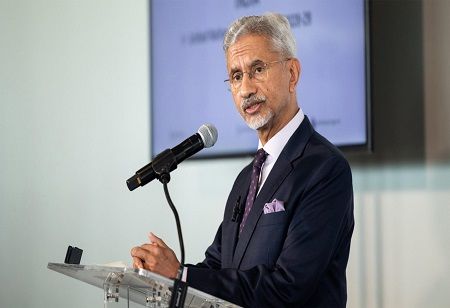
Speaking at the launch event at the United Nations headquarters in New York, Jaishankar said India’s candidacy shows its old commitment to encourage international peace, security, and inclusive world-wide development. He also said that India intends to work in tandem with UN member states to create common ground on hard international questions while pushing reforms that make global institutions more representative and more practical too.
A central focus in India’s campaign is trying to shore up international efforts to counter terrorism and also disrupt the flow of terror financing. Jaishankar said again that terrorism still counts among the most serious threats to world peace and security, and he pushed for better global coordination so that financial networks don’t end up backing extremist organisations. He also highlighted that it matters to implement the UN counter-terrorism resolutions that already exist, and at the same time make sure there is more accountability when it comes to cross border terrorism, because it keeps spreading in practice.
Maritime security has also been seen as a major priority, more or less. India pointed out that it is important to safeguard freedom of navigation, protect critical sea lanes, and in general strengthen international cooperation, to deal with issues like piracy illegal trafficking maritime terrorism and interruptions to global supply chains. Also, since India is a country with wide maritime interests in the Indian Ocean Region, it really stressed the value of keeping a calm steady and rules-based maritime order, even if things are complicated, sometimes.
The External Affairs Minister also reiterated India’s ongoing dedication to UN peacekeeping activities. India still is one of the biggest contributors for UN missions with peacekeepers and it has, over time, kept backing measures meant to strengthen the work, the security and the field readiness, of the peacekeeping troops that are deployed across areas affected by conflict zones.
Also read: UP Approves Startup, Data Centre Policies to Boost Growth
Seeing how fast emerging technologies are starting to matter more, Jaishankar pointed out AI, artificial intelligence, as a key topic that needs cooperation across borders. In his view there should be international frameworks that are balanced and not only push innovation but also take care of worries about ethics and transparency, plus cybersecurity, and the responsible way these artificial intelligence technologies are actually used. India also urged inclusive conversations so that countries that are still developing won’t end up on the side lines, but can get real benefits from the technological advancements too.
During the campaign launch, climate action and sustainable development, plus the interests of the Global South, were mentioned in a sort of broad way. India also re-affirmed its commitment to help bring about equitable economic growth, climate resilience, food security, better energy access and digital inclusion, especially for developing nations. Jaishankar said India’s path will keep leaning into practical answers that tackle common global problems, through international cooperation, not just slogans, but actual steps.
India also reiterated its longstanding point of view on comprehensive reforms at the United Nations, especially the expansion of the Security Council, so it can mirror today’s geopolitical realities better. In a way, the country keeps saying that wider representation is necessary, for example to boost the Council’s legitimacy, credibility, and also its overall performance when it comes to tackling modern global matters.
India, earlier, was a non-permanent member of the UN Security Council for the 2021–22 term, during which it chaired several important committees, and at the same time it joined in discussions on peacekeeping, maritime safety, counter-terrorism and humanitarian assistance. The government said that its experience from that stretch has, somehow even more strengthened its resolve to contribute in a constructive way to the Council’s work.
The vote for those non-permanent seats on the Security Council will be held by the United Nations General Assembly, and in that place the candidate countries need backing from a two thirds majority of member states. Once selected, India would then be on the Council for a two year term, starting January 1, 2028.
By launching the campaign early, and presenting a comprehensive agenda that is focused on security, development, technology, as well as multilateral cooperation, India tries to drum up broader international backing for its candidacy, while also reinforcing its role as a responsible participant in global governance. In other words the whole thing sort of signals it is, engaged, and attentive.