Jaishankar Highlights India's Indo-Pacific Vision at G7 Summit
- India calls for diversified, trusted maritime links to ensure resilience across the Indo-Pacific region.
- Robust port infrastructure and logistics chains are vital to upholding secure maritime trade corridors.
- A rules-based maritime order under UNCLOS is essential for open and inclusive seas.
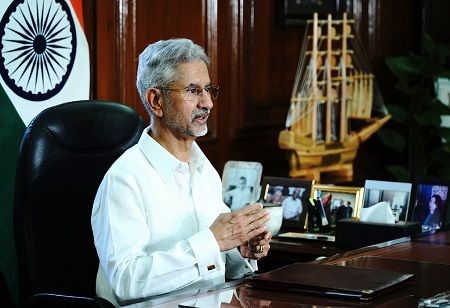
At the Ottawa session of the G7 Foreign Ministers’ meeting, S. Jaishankar laid out India’s vision for the Indo-Pacific, stressing that those maritime routes must remain both secure and open. He described the increasing interconnectedness of global trade and underscored how resilient, trustworthy sea-links underpin not just national prosperity but also global stability.
Jaishankar emphasised India’s “MAHASAGAR” outlook, a strategic framework for maritime security, growth, and connectivity in the wider region. He pointed out India’s efforts to strengthen its shipping infrastructure and diversify routes, making them more robust against disruptions. At the heart of his remarks was the need for collaborative efforts among states to safeguard key maritime and undersea infrastructure, given rising concerns about piracy, smuggling, and illegal, unreported and unregulated (IUU) fishing.
Also Read: India Launches ₹450.6 Billion Plan to Aid Exporters Hit by US Tariffs
He further described India’s role as a “first responder” in the maritime domain, especially in Humanitarian Assistance and Disaster-Relief (HADR) operations across the Indo-Pacific. Jaishankar made clear that India’s commitment is to a rules-based order, citing the importance of the United Nations Convention on the Law of the Sea (UNCLOS) as the foundation for maritime governance. He emphasised that secure ports and trade corridors embedded in a free, open and inclusive maritime system are vital for the collective prosperity of nations.
The Indian external affairs minister also referenced India’s bilateral and multilateral efforts: upgrading port infrastructure, building resilient logistics chains, and enhancing regional linkages. He invited G7 partners and other democratic maritime-nations to join in shared responsibility for maritime safety and open navigation.
Ultimately, India’s Indo-Pacific vision, as sketched by Jaishankar, calls for durable partnerships, diversified maritime networks and adherence to international law so that the vast sea-lanes of this critical region remain safe, stable and conducive to growth.