MeitY Rolls Out Indigenous 30kW EV Drive System
- MeitY launched a 30 kW Wide Band Gap-based Integrated Drive System developed by C-DAC, IIT Madras, and Lucas TVS to boost domestic EV capabilities
- The system targets India’s electric passenger vehicle segment, aiming to localise high-performance powertrain components and support PLI-led manufacturing
- Combining motor and inverter into a compact, high power-density unit, the technology enhances efficiency and strengthens India’s EV supply chain and MSME participation
India’s Ministry of Electronics and Information Technology (MeitY) has launched an indigenously developed 30 kW Wide Band Gap (WBG)-based Integrated Drive System to accelerate electric vehicle adoption and strengthen domestic power electronics capabilities.
The MeitY EV innovation marks a major step forward with the indigenous 30kW drive system, strengthening India EV technology, advancing electric vehicle powertrain India capabilities, reinforcing the MeitY electric mobility push, promoting Make in India EV components, and accelerating EV ecosystem development.
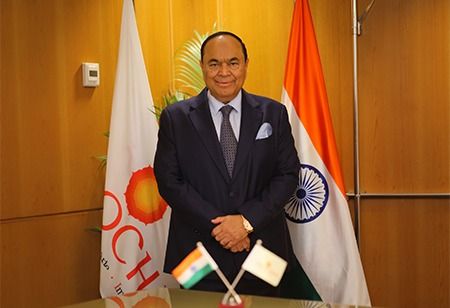
The Centre for Development of Advanced Computing, Thiruvananthapuram developed the system together with the Indian Institute of Technology Madras and Lucas TVS. MeitY Secretary S. Krishnan unveiled the system at the IIT Madras campus.
The 30 kW systems provides a solution for India’s growing electric passenger vehicle market, which focuses on compact cars and fleet mobility systems, since it solves the country’s dependence on foreign high-performance EV powertrain systems and semiconductor-based components.
The Ministry stated, “The technology has been successfully designed, fabricated, and validated in collaboration with Lucas TVS and is now ready for commercialisation and large-scale deployment”.
Also Read: VinFast Revives Interest in India's EV Manufacturing Scheme
The initiative aims to decrease import dependency while decreasing costs through local production, which will help domestic manufacturing under Production-Linked Incentive programs.
The electric motor and inverter exist as an integrated drive system, which creates a compact unit with high power capacity that eliminates the need for separate components. The design achieves three advantages because it enhances efficiency.
The system creates various business possibilities because it will strengthen India's electric vehicle supply chain while enabling micro, small, and medium enterprises to work with power electronics, thermal management and control hardware systems.
Krishnan stated that the development demonstrates Prime Minister Narendra Modi's "Make in India, Make for the World" vision because it shows that India has transformed from being a technology importer into a nation that develops and exports technology.
The project operates through the National Mission on Power Electronics Technology (NaMPET), demonstrating how R&D institutions, academic institutions and industrial organizations work together to create domestic intellectual property while advancing high-value electric vehicle production.