
Can India Lead the World in Intelligent Machine Manufacturing?
Sridhar NP - Managing Director and Chief Executive Officer of TEAL (Titan Engineering & Automation Limited) in an engaging interaction with Janifha Evangeline. X, Editor, India Manufacturing Review magazine shared his views on the unique advantages that position India to emerge as the world’s hub for intelligent machine manufacturing, how India can leverage its strengths in engineering, software and AI to build a globally competitive intelligent machines industry, Some of the biggest challenges preventing India from becoming a leader in robotics, industrial AI and intelligent systems and more.
What unique advantages position India to emerge as the world’s hub for intelligent machine manufacturing?
The foundation of intelligent or smart machines lies in deep engineering expertise. Designing and manufacturing advanced automation systems require far more than software innovation - it demands the integration of diverse engineering disciplines. This is where India holds a distinct advantage, with a vast pool of highly skilled engineers capable of driving innovation at scale.
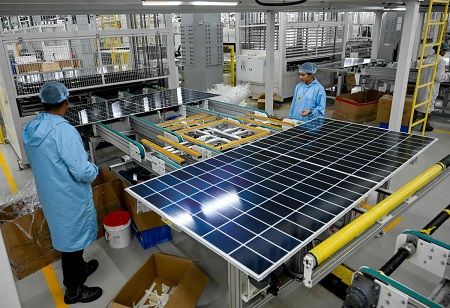
Industrial automation is one of the few sectors where multiple technologies converge. Mechanical, electrical, and control engineering work alongside embedded software, Human-Machine Interfaces (HMI), Manufacturing Execution Systems (MES), SCADA, robotics, machine vision, sensors, and factory connectivity to create intelligent manufacturing equipment. Developing such systems requires seamless collaboration across these domains, making automation one of the most technologically intensive industries today.
India's engineering talent provides a strong foundation for building this ecosystem. The country possesses the scale and technical expertise needed to design, develop, and manufacture sophisticated automation equipment. Few nations combine such a broad engineering base with the capacity to support large-scale industrial growth.
China currently leads in the application of these technologies, largely because it established itself as the world's manufacturing hub over two decades ago. Manufacturing contributed nearly 30% of China's GDP during its growth phase, creating sustained demand for advanced automation solutions. India, where manufacturing contributes around 15% of GDP, is now entering a similar period of industrial expansion.
This transformation is being driven not only by the automotive sector but also by the rapid growth of electronics, semiconductors, solar energy, batteries, and other emerging industries. As new supply chains are established, domestic demand for intelligent manufacturing equipment will increase significantly. Meeting this demand through indigenous capabilities is essential; otherwise, India will remain dependent on imported automation systems, limiting its manufacturing competitiveness.
India already possesses many of the essential building blocks, including precision tooling, high-accuracy CNC machining, robotics, sensors, vision systems, and advanced automation design capabilities. Bringing these strengths together presents a unique opportunity to create a globally competitive automation industry.
With its engineering talent, manufacturing capabilities, and expanding industrial base converging at the right time, India is exceptionally well positioned to build intelligent manufacturing equipment at scale and establish itself as a global leader in industrial automation.
How can India leverage its strengths in engineering, software and AI to build a globally competitive intelligent machines industry?
India possesses the engineering expertise needed to build intelligent manufacturing equipment, but long-term global competitiveness depends on developing a strong domestic market. One of China's greatest advantages is the scale of its manufacturing ecosystem, which has enabled the creation of a comprehensive local supply chain for automation technologies.
In China, manufacturers have access to numerous domestic suppliers for critical components such as industrial robots, programmable logic controllers (PLCs), sensors, and other automation hardware. This extensive ecosystem reduces transportation costs, import duties, and procurement lead times while fostering competition that lowers prices. As a result, Chinese manufacturers benefit from significantly lower production costs.
India, in contrast, continues to rely heavily on imported components for intelligent machines. Key technologies, including industrial robots and widely used PLCs, are largely sourced from overseas. This dependence increases manufacturing costs and creates a competitive disadvantage, particularly when competing with China.
Despite these challenges, India has important strengths. The country offers world-class engineering talent at competitive costs and has established precision manufacturing capabilities across industries such as automotive and aerospace. These capabilities provide a strong foundation for developing a domestic automation ecosystem and scaling intelligent manufacturing in the future.
While India currently trails China in supply chain maturity, it compares favorably with many other global manufacturing destinations. As domestic manufacturing expands across sectors such as electronics, semiconductors, renewable energy, batteries, and advanced industrial production, demand for automation equipment will rise. This growing market can encourage local production of critical components, gradually strengthening the country's supply chain and narrowing the competitive gap.
Success will also depend on choosing the right market strategy. Competing directly with China in standardized, high-volume automation equipment may prove difficult due to China's scale and cost advantages. However, India is well positioned to excel in customized automation solutions designed for specific industrial applications. These solutions require deep engineering expertise, design flexibility, and close customer collaboration - areas where Indian companies possess significant competitive strengths.
By focusing on high-value, customized automation while simultaneously expanding its domestic supply chain, India can leverage its engineering capabilities, reduce import dependence, and establish itself as a globally competitive hub for intelligent manufacturing equipment.
Also Read: How India's Manufacturing Growth is Outpacing its Talent Supply
What are the biggest challenges preventing India from becoming a leader in robotics, industrial AI and intelligent systems?
India's biggest challenge in becoming a global leader in intelligent manufacturing equipment is the scale of its manufacturing sector. With manufacturing contributing around 15% of GDP, the country is still building the industrial base required to support a robust automation ecosystem. Expanding manufacturing to a larger share of the economy will create the domestic demand needed to develop a competitive supply chain for intelligent machines.
A strong domestic market is critical because it encourages investment in local manufacturing of automation technologies and components. As manufacturing expands across industries, the supporting ecosystem will naturally strengthen, reducing dependence on imports and improving overall competitiveness.
The second major challenge is the availability of skilled talent. Intelligent manufacturing combines multiple disciplines, including mechanical, electrical, control, and software engineering, requiring a workforce with specialized, industry-relevant expertise. While India has a large engineering talent pool, there is a need to align academic curricula more closely with the evolving requirements of industrial automation.
Addressing this gap will require close collaboration between industry, governments, educational institutions, and skill development organizations. Updating engineering programs, establishing specialized training centers, and developing industry-focused certification programs will help create a pipeline of professionals equipped with the competencies required for advanced automation. As the talent pool expands, companies will be able to scale more efficiently while maintaining global cost competitiveness.
Building a comprehensive domestic ecosystem is equally important. Today, many of the critical components used in intelligent manufacturing - including industrial robots, sensors, servo motors, cameras, lenses, machine vision systems, and motion control technologies are largely imported. Although a few Indian companies are developing automation solutions such as autonomous mobile robots (AMRs) and automated guided vehicles (AGVs), the broader ecosystem are still in their early stages.
Developing local capabilities across these technologies will significantly strengthen India's competitive position. A mature domestic supply chain would lower costs, reduce dependence on imports, improve resilience, and accelerate innovation. As India's manufacturing sector grows, it will create the scale necessary for suppliers of these critical technologies to establish local operations. This combination of manufacturing growth, skilled talent, and a self-reliant automation ecosystem will be fundamental to positioning India as a global powerhouse in intelligent manufacturing equipment.
How can startups, manufacturers, academia and policymakers collaborate to accelerate India’s intelligent manufacturing ambitions?
For Indian startups to compete globally in intelligent manufacturing, they must focus on innovation rather than replicating technologies that are already well established elsewhere. Competing with "me-too" products is unlikely to create long-term value. Instead, startups should identify emerging areas where India can build differentiated capabilities and establish global leadership.
While several international companies, particularly in China, are investing heavily in humanoid robotics, India has an opportunity to leverage its strengths in software, artificial intelligence, and engineering. Rather than concentrating solely on hardware innovation, startups can develop AI-powered software platforms that make manufacturing systems more intelligent, connected, and adaptable. Over time, hardware is likely to become increasingly commoditized, making software the primary source of differentiation and value.
One promising area is the development of standardized AI software stacks that can be deployed across a wide range of industrial automation applications. Such platforms could integrate data from machines, production systems, and factory operations, enabling intelligent decision-making regardless of the underlying hardware. This software-centric approach aligns well with India's established expertise in software engineering and digital technologies.
Another significant opportunity lies in applying AI to engineering design. While generative AI has advanced rapidly in areas such as text, voice, images, and video, relatively few organizations are building AI models trained on engineering data, including CAD, CAM, and historical product designs. AI solutions capable of analyzing past engineering projects, recommending optimized designs, or accelerating product development could fundamentally transform industrial design and manufacturing. This presents a valuable opportunity for Indian startups, research institutions, and academia to pioneer globally competitive innovations.
Machine learning also offers tremendous potential in manufacturing through vision systems, predictive maintenance, quality inspection, and factory analytics. Cameras and industrial sensors are generating vast volumes of operational data that can be used to predict equipment failures, improve productivity, optimize processes, and enhance product quality. As factories become increasingly data-driven, these AI-powered capabilities will become central to manufacturing competitiveness.
Realizing these opportunities, however, depends on the continued expansion of India's manufacturing sector. A larger industrial base will create the demand, scale, and commercial ecosystem necessary for startups to develop, validate, and deploy next-generation intelligent manufacturing solutions, positioning India as a global innovation hub in industrial automation.
About Sridhar NP - Managing Director and Chief Executive Officer of TEAL (Titan Engineering & Automation Limited):
Sridhar has over 30 years of experience. Currently, he is the Managing Director and Chief Executive Officer of TEAL (Titan Engineering & Automation Limited) that includes automation and precision manufacturing business. He has been part of the senior management team of Titan Company Limited (Titan) for over a decade.
He joined Titan in 1994 as a management trainee, started his career in the supply chain of watches, and went on to take up various roles at Titan. He also has worked in Wipro, mostly based out of the UK and Finland, where he played strategic roles as Client Engagement Director for large clients in UK and Europe.