
India 2025: Industrial Automation & Electronics Shift to Execution
As 2025 concludes, India’s industrial automation, instrumentation, electronics, and semiconductor sectors are at a pivotal juncture. The focus has shifted from scale and intent to execution, with strong capital investment, smart technologies, and localized manufacturing driving growth. Policymakers, industry leaders, and stakeholders are aligned on sustainable, value-driven strategies. Looking ahead to 2026, adoption of AI, IIoT, digital twins, and advanced packaging is expected to accelerate India’s position in global, high-value technology markets.
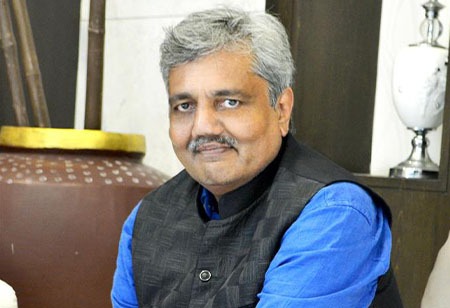
Dr Bijal Sanghvi, Managing Director, Axis Solutions
As we conclude 2025, the industrial automation and instrumentation sector in India is at a potential turning point. With strong capital expenditure in the process industries and a global shift towards sustainability, the demand for smart, data driven systems are becoming urgent. The shift towards real-time analytics, IIoT enabled control and AI-assisted diagnostics is rapidly deployed providing facilities safer and greater up-time and lifecycle value.
Looking ahead to 2026, we expect growth in the integrated automation space to accelerate sharply. This is expected to be driven by a widespread adoption of cloud-based monitoring, digital twins, cyber-secure architectures and energy-efficient instrumentation. With stricter emission norms, renewed sustainability commitments and a growing demand for operational resilience, quicker growth is anticipated.
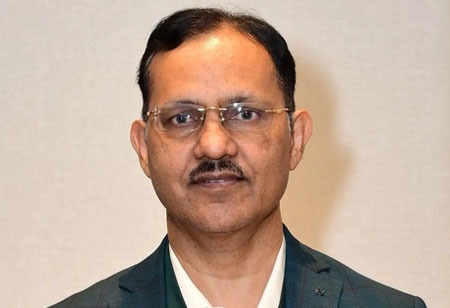 Ashok Chandak, President of the India Electronics and Semiconductors Association (IESA) and SEMI India
India’s Electronics Growth Shifts from Scale to Value
India’s electronics growth story is no longer episodic - it is structural. Policymakers, global and Indian industry leaders, and ecosystem stakeholders are now aligned on building resilient, sustainable, and globally competitive value chains. As discussions in 2025 highlighted - spanning policies and incentives, electronics value addition, skilling, academic partnerships, and industry collaboration - the next phase must focus on execution, joint R&D, and technology transfer. The increased use of locally made semiconductors and components will be central to deeper value addition and the long-term success of India’s electronics industry.
India’s Semiconductor Journey Enters the Execution Phase
India’s semiconductor journey has moved from intent to execution, marking a clear structural shift. Policymakers, global and Indian industry leaders, and ecosystem stakeholders are aligned on building resilient and competitive semiconductor value chains. Key priorities discussed in 2025, including semiconductor policies and incentives, human capital development, fabs, advanced packaging and OSAT, academic partnerships, and industry engagement, underscore the need for joint R&D, technology transfer, and well-defined pathways to scale. Over the next three years, disciplined execution and localisation across design, manufacturing, and advanced packaging will be critical to enable chips for high-volume electronic products consumed locally.
From Intent to Execution: India’s Electronics & Chip Inflexion Point
India’s electronics and semiconductor journey has moved from intent to execution. This is not a spike, but a structural shift. Policymakers, global and Indian industry leaders, and ecosystem stakeholders are now aligned on building resilient, sustainable, and globally competitive value chains. Discussions in 2025 spanning policies and incentives, talent development, academic partnerships, fabs, advanced packaging and OSAT, electronics value addition, and industry collaboration have set clear priorities for the next phase. The focus must now be on disciplined execution, product development, research and development, and technology transfer. Over the next three years, deeper localization across design, manufacturing, and advanced packaging will be critical. Increased use of locally made semiconductors and components must become a clear priority. This will enable scalable, value-added manufacturing and stronger system design capabilities. Together, these efforts will support high-volume electronic products for both domestic consumption and global markets.