How India's Manufacturing Growth is Outpacing its Talent Supply
The Indian manufacturing sector is moving forward at a brilliant pace. Policy trends, geopolitical realignment, and an emphasis on self-reliance have boosted investments across sectors, starting from electronics and semiconductors to automotive and renewable energy. However, there is a structural vulnerability that has been hiding beneath this much-celebrated acceleration. India’s manufacturing transformation is being outpaced by its talent pipeline. As the country’s manufacturing sector grows, it is being throttled by a sheer talent deficit. To put it simply, India is now building smart, up-to-date factories even before it is sufficiently training and building people who can run them.
Is it a Mere Challenge or Structural Change?
This is not just a temporary hiring issue. It is in fact a deep structural shift. The reason behind this is that manufacturing in India now no longer entails just labour-intensive production but has rather moved to technology-led, precision-driven setups. Manufacturing leaders now prioritize technical skills such as automation, CNC operations, and data analytics over traditional capabilities. Automation, robotics, loT and AI are no longer bets this country places in the future but are already active participants in the modern production systems.
With this shift intensifying, routine and manual functions are now declining in terms of relevance. It is being replaced by hybrid roles which demand for talents who incorporate engineering knowledge, digital fluency and systems thinking. We cannot possibly term this as job loss, it is not, it is a major job transformation at scale. However, the workforce is yet to evolve at the same pace as the industry.
Understanding the all New Manufacturing Workforce
The new age manufacturing professional is not defined by their ability for physical output but actually by their potential to interface with technology. Across smart factories in India, there are new job archetypes that are coming along the way, such as automation engineers, robotics programmers, loT architects, digital maintenance specialists and mechatronic experts. These roles now sit at the crossroad of mechanical systems and software intelligence.
This shift is slowly becoming visible in the hiring processes. As per reports, nearly 82% of manufacturers expect to increase hiring for automation and maintenance engineers, while 42% have reported difficulty in finding talent with the required data and digital skills. It does not make it any better with only about one-third of the workforce being considered digitally proficient.
To reiterate the thought, organizations are now on the lookout for not just engineers with degrees but for “new collar” talent. A talent that will be able to pave their way and operate in digitally integrated environments.
Is The Scale of Talent Gap Becoming Unsustainable?
There is a mammoth limitation that is getting in the way of India’s manufacturing ambitions, and that is the availability of skilled talent. Close to 80% of manufacturers report difficulty in finding skilled professionals, this is much higher than the global average. On the other hand, by FY28, the sector will need around 12 million professionals, with a depicted skill gap of nearly 10 million.
This is perhaps a classic depiction of quantity vs. quality mismatch. There is a large workforce in India, but they lack depth in critical skills.
What is the hardest gap to solve?
The entry-level hiring continues to fare well, while leadership talent can be brought in from elsewhere and be trained with time. The lacuna is building around mid-career professionals. The ones with 6-14 years of experience are expected to translate digital strategy into operational execution, manage hybrid teams of humans and machines, and much more. Yet, this is where the pipeline is at its weakest.
This is no new news that India produces millions of graduates every year, but employability continues to be inconsistent. Recent data has shed light on how a large number of graduates are not placed because of the gap between education and industry requirements.
There is a stark mismatch - a large proportion of graduates remain unplaced despite strong hiring intent, underscoring the gap between education and industry requirements. Hence, the result is nothing but a hollowed-out pyramid featuring strong entry-level supply, very limited mid-level capability, and highly expensive senior talents. When it comes to the manufacturing industry, it is the missing middle section that is becoming a constraint.
Technological Advancements Are Pacing Ahead Of Talent
The rate, at which Indian manufacturers are adopting technology, including AI and automation, is enviable. These tools are becoming core practices when it comes to day-to-day operations. The workforce, though, is lagging much behind. Randstad’s Workmonitor 2026 shows that 89% of Indian talent believes AI improves productivity, while 55% of employers expect it to significantly transform job roles. Yet, 59% of talents feel the benefits of AI accrue more to organizations than to employees, highlighting a clear capability gap.
This disconnection is slowly reflecting in the business. Companies now have to conduct a prolonged hiring cycle, and they are faced with growing premiums for niche skills and the underutilization of advanced systems.
The Real Test for India’s Manufacturing Ambition
India’s manufacturing hopes and dreams are at their zenith, and they are well within reach. However, the next phase of growth will not be governed by just capital and policy singlehandedly. Another key aspect in the growth would be whether the country can foster a workforce that is able to match the pace of its industrial transformation.
To be able to bridge this gap will require a lot more than incremental hiring. It will need a structure, a structure that has been rethought in terms of how talent is built. With manufacturing roles becoming more and more technology-driven, the sector will need to reposition itself in a way that it cannot just attract but also retain digitally-savvy talent.
About the Author:
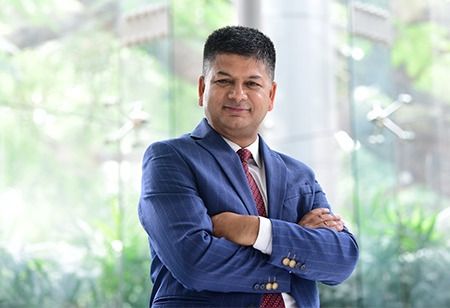
Yeshab Giri is Chief Commercial Officer – Operational Talent Solutions at Randstad India, where he drives growth in staffing, engineering, and technology talent services. With extensive experience in recruitment and workforce strategy, he has held senior leadership roles within Randstad’s staffing divisions, helping organizations align talent acquisition with evolving industry and digital workforce demands