Why "Card in Minutes" is a Competitive Edge for Banks & Fintechs
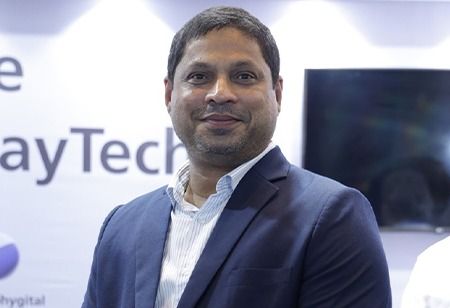
Naresh Rao, VP & Sales Head Issuance Products, Giesecke & Devrient India, in an interaction with Raja Ramya, Correspondent, India Manufacturing Review shares his views on how instant digital card issuance accelerate customer activation and first transaction, why “time-to-first-spend” is becoming a core growth metric for banks and fintechs and more.
Naresh Rao is Vice President and Sales Head – Issuance Products at Giesecke & Devrient India, bringing over 25 years of experience in the payments and financial services industry. He has deep expertise in card issuance, digital payment security, EMV migration, and fintech‑driven transformation.
How does instant digital card issuance accelerate customer activation and first transaction?
Instant digital card issuance reduces the time between approval, activation and first use. Traditionally, it is delayed because of onboarding, KYC verification, underwriting and shipment of cards, which takes days.
With digital issuance, this is all streamlined into a continuous experience. It means that customers can use their cards immediately after obtaining approval, enabling them to make payments such as reservations or online purchases without having to wait for a physical card to arrive.
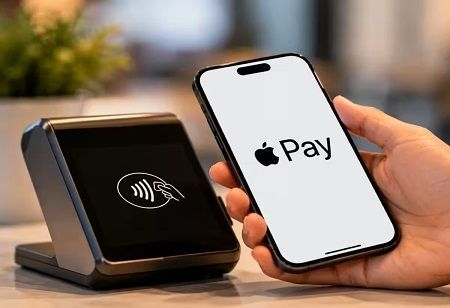
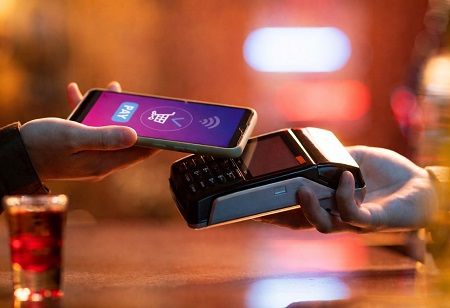
This instant accessibility makes this initial experience a positive one, which often progresses into a "top-of-wallet" scenario where the card is used as the preferred payment method and, instant provisioning into mobile wallets enables immediate transactions via online and ‘tap and go’ channels. This frictionless approach to immediate use allows banks and fintechs to increase card activation, time-to-first-use, and enhance the initial customer journey.
Why is “time-to-first-spend” becoming a core growth metric for banks and fintechs?
Time-to-first-spend have become a very important metric since it directly correlates customer acquisition with revenue realization. The shorter the gap is between onboarding and the first transaction, the higher the likelihood that a customer becomes active, engaged, and profitable.
An early transaction increases the likelihood of the card becoming the customer’s preferred payment method. It also enables issuers to start earning faster and gaining a bigger portion of customer expenditure.
The capability to facilitate instant expenditure is a major point of differentiation in an increasingly competitive environment. It is not only operational efficiency, but the quality of the customer experience in general. Consequently, time-to-first-spend is currently considered a fundamental measure of growth and engagement.
Can “card-in-minutes” reduce customer acquisition costs while increasing lifetime value?
Card-in-minutes solutions impact both customer acquisition costs (CAC) and lifetime value (LTV). When it comes to CAC, digital issuance reduces friction in onboarding, reduces follow-ups and reduces the costs of collecting documents and engaging customers. On the other hand, expedited activation helps build new habits and drive early usage, thereby improving customer lifetime value.
Issuing cards for immediate activation increases transacting immediately which keeps customers engaged and increases revenue streams over the long run. Instant issuance is now a critical tool for leading banks and fintechs to enhance unit economics.
How does instant issuance reshape fraud risk and real-time identity verification?
Instant card issuance is ushering in a shift from front-loaded verification processes to real-time risk management. Real-time onboarding uses technologies that incorporate real-time KYC and authentication, removing the need for physical verification or branch visits.
New technologies, such as AI-driven monitoring, facilitate early detection of anomalies and tokenization means sensitive card data such as CVV is never shared in a transaction. Furthermore, biometrics and dynamic security codes also enhance security frameworks.
But the trick is to be fast and secure. Banks need to allow genuine users to be processed in real time, while identifying and preventing fraudulent users in a seamless manner. Those that get this right will excel in the next stage of digital payments.
What role does embedded finance play in making instant cards mainstream?
Embedded finance is a key enabler of the uptake of instant cards as it embeds financial services into the digital experiences that users already use. Rather than customers undergo onboarding processes to access cards, card issuance can occur within existing platforms, as and when needed.
This approach broadens the distribution of financial services beyond traditional banking channels and allows non-bank platforms to provide financial services without having to set up separate systems. Users can access credit and payment solutions at a moment's notice at their fingertips.
Without embedded finance, instant issuance is an option. With it, instant cards become a critical part of digital transactions and transform the delivery of financial services.
How can faster card issuance improve conversion across lending, BNPL, and wallets?
An immediate issuance of credit cards has a direct impact on conversion rates as it meets the demand at the right time. Instant access to approved credit eliminates delays in lending processes, which can lead to abandonment.
In payments, faster issuance improves payment experiences by making payments faster and smoother. It also speeds up the adoption of mobile wallets, as users are able to transact instantly in different digital platform.
This is an example of a shift in attitude - no longer apply now, use later, but get it and use it now. As BNPL evolves, the underlying principle is quite straightforward: “frictionless and immediate processes improve conversion rates.
Will physical cards become secondary as digital-first issuance becomes the default?
The speed and immediacy of virtual cards are leading digital first issuance to become the norm. Consumers want to be able to "transact, make bookings, and pay online" in real time.
But it is unlikely that physical cards will be removed. They remain important for in-person transactions and offer a physical presence for brand awareness for financial firms. Also, they can be used as a backup when digital networks might be down.
A new hybrid card is emerging where both the digital and physical formats co-exist. Customers expect to be able to interchange formats as needed. In this new environment the answer to card issuance is not replacement, but evolution.