Apple Eyes iPhone Chip Assembly in India to Boost Local Manufacturing
- Apple in early talks for iPhone chip assembly in India
- Focus on CG Semi's Gujarat OSAT for display chips
- Deepens local push amid US tariff, China shift
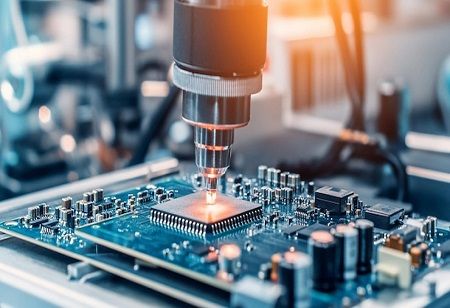
Apple is initiating the very first round of conversations with Indian semiconductor companies, aiming to locally manufacture and package some of the iPhone components for the first time. It is a signal of a possible change in the company’s local manufacturing strategy to not just device assembly. According to the news, the main subject of the talks is CG Semi—a Murugappa Group company that is building an OSAT (outsourced semiconductor assembly and test) facility in Sanand, Gujarat—most probably focusing on display driver integrated circuits (DDICs), but no details have been revealed yet.
As of now, Apple's DDICs are sourced from companies such as Samsung, Novatek, Himax, and LX Semicon, with production and packaging mostly happening in South Korea, Taiwan, and China. To have them done in India would be a significant step in the semiconductor value chain domestics, which would also entail less dependence on East Asian hubs that are subject to geopolitical tensions and U.S. tariff policies on Chinese imports. By the end of 2026, Apple intends to manufacture most of the iPhones that are bound for the U.S. market in India, where models like the iPhone 17 series have already been locally assembled from the day of the launch.
Also Read: Navitas, Cyient Partner to Accelerate GaN Adoption in India
CG Semi's Sanand facility, which is expected to be in operation by 2026, has the capability of full chip assembly, packaging, testing, and post-test services. Although Apple and CG Semi refrained from giving detailed comments—they did not disclose any speculation until there are concrete developments—the move is consistent with the expansion of India’s semiconductor ecosystem, which is supported by such collaborations as Intel-Tata Electronics.
In case everything goes well, it would provide the following benefits: supply chain adaptability, creation of highly skilled jobs, and a higher ranking of India in global tech manufacturing. However, suppliers should bear in mind that they have to comply with Apple's stringent quality standards. This event completes Apple's transition to a faster diversification strategy, which mainly consists of China. It is leveraging the existing iPhone manufacturing that created significant economic effects, including hundreds of thousands of jobs.