India Advances Reusable Rocket Development With 200 Cr Fund
TDB signs a ₹200 crore RDI Fund agreement with Agnikul Cosmos to develop the reusable Agnibaan launch vehicle, advancing technologies for repeatable launches, controlled recovery and lower-cost access to space.
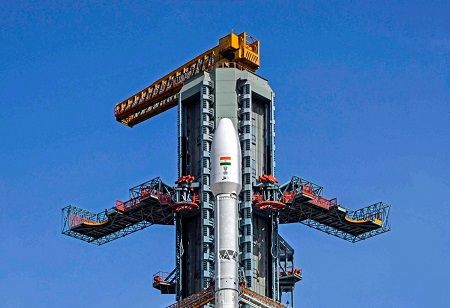
The Technology Development Board (TDB), under the Department of Science and Technology (DST), has signed a ₹200 crore agreement with Chennai-based space technology company Agnikul Cosmos to support the development of its reusable Agnibaan launch vehicle.
The financial assistance is being provided through the Research Development and Innovation (RDI) Fund and will support the advancement of the Agnibaan Reusable Launch Vehicle (RLV) technology from Technology Readiness Level (TRL) 4 and above to TRL 8. The funding will be provided through Optionally Convertible Debentures (OCD).
Also Read: Will GST Reforms Create a New 'Sub-₹10 Lakh Tech Car' Segment?
The project aims to move beyond conventional launch systems that focus on recovering only the first stage of a rocket. Agnikul's proposed architecture is designed for full-system reusability, with the objective of enabling more frequent and repeatable launches while reducing launch and manufacturing costs and limiting the generation of space debris.
The Agnibaan RLV architecture will incorporate a lightweight upper stage, precise orbital insertion capabilities and a semi-cryogenic liquid propulsion system capable of deep throttling and engine restart. These technologies are intended to provide greater flexibility during missions and support controlled descent and recovery of the vehicle.
The programme will focus on several technologies required for reusable launch operations, including propulsion, ascent systems, orbital insertion, descent and recovery. Restartable and deep-throttling propulsion systems will be particularly important for descent and landing operations. The project falls within the RDI Fund's priority area covering advanced and reusable launch vehicles and propulsion technologies.
Agnikul has previously developed and tested several indigenous technologies. Its work includes Agnibaan, an orbital-class launch vehicle, and Agnilet, a single-piece, 3D-printed rocket engine developed and manufactured in-house. The company also successfully conducted the maiden launch of Agnibaan SOrTeD, which used a single-piece 3D-printed engine.
TDB had earlier provided financial assistance to Agnikul for developing and commercialising a modular, configurable launch vehicle for small satellite missions. The new agreement extends that collaboration towards reusable launch technology.
Also Read: Manufacturing Momentum: Fuelling India's Third-Economy Leap
TDB Secretary Rajesh Kumar Pathak said reusable launch technology would be important for increasing the frequency, flexibility and efficiency of access to orbit. Agnikul's promoters said the support would help integrate propulsion, vehicle design, guidance, recovery and mission operations into a reusable launch system.