How India can become a Global Manufacturing Hub by 2030
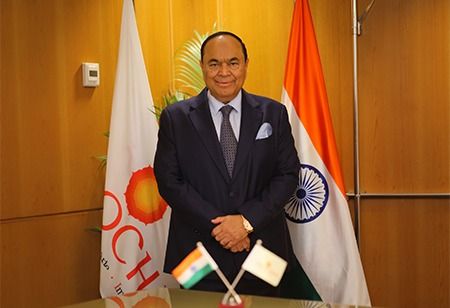
Nirmal K Minda, President, ASSOCHAM in an interaction with Janifha Evangeline. X, Editor, India Manufacturing Review shared his views on how Indian manufacturers are adapting to the shift toward electric mobility and advanced manufacturing technologies, how MSMEs are integrating into global supply chains and benefiting from India’s manufacturing push and more.
What are the biggest opportunities for India to strengthen its position as a global manufacturing hub over the next five years?
The global manufacturing landscape is changing rapidly. Companies are no longer looking only for the lowest-cost destination, but they are considering reliable, resilient and diversified supply chains. ASSOCHAM believes this is India's biggest opportunity. With a large domestic market, a young workforce, improving infrastructure and a stable policy environment, India is well placed to become a preferred manufacturing and export hub.
The first opportunity is to move higher up the value chain. India has shown its manufacturing capabilities in sectors such as electronics, automobiles, pharmaceuticals and engineering goods. The next phase should focus on adding greater domestic value, component manufacturing, product design and R&D. The success of the PLI scheme has shown that well-designed policy support can attract investment and build manufacturing capacity. As of March 2026, PLI schemes across 14 sectors have attracted over INR 2.4 lakh crore in investments, generated more than 14 lakh jobs, and contributed significantly to exports.
The second opportunity is to build world-class industrial ecosystems. Manufacturers today value speed and ease of setting up operations as much as incentives. Schemes like BHAVYA, which aims to develop 100 plug-and-play industrial parks with an outlay of INR 33,660 crore, along with PM Gati Shakti and industrial corridors, can significantly reduce project timelines and logistics costs while making India more competitive.
The third opportunity is India's increasing integration with global markets. As India signs more trade agreements, 9 FTAs with 38 countries in just 6 years, and global companies diversify their sourcing strategies, Indian manufacturers have a chance to become an integral part of global value chains. However, this will require consistent quality standards, predictable policies and greater participation of MSMEs as suppliers to global manufacturers.
We believe that the focus now should be on improving competitiveness rather than only expanding capacity. Continued reforms in ease of doing business, faster approvals, lower logistics costs, greater technology adoption and investment in skills will determine whether India simply attracts manufacturing or truly becomes a global manufacturing hub.
How are Indian manufacturers adapting to the shift toward electric mobility and advanced manufacturing technologies?
Indian manufacturers are adapting much faster than they were a few years ago. The transition is no longer limited to adopting new technologies; it is now about innovation - rethinking products, production processes and supply chains to remain globally competitive.
In electric mobility, companies are investing across the entire value chain from batteries and power electronics to charging infrastructure and advanced auto components. Government initiatives such as the PM E-DRIVE Scheme, the PLI Scheme for Automobile & Auto Components and the PLI Scheme for Advanced Chemistry Cell (ACC) Batteries have accelerated this transition by encouraging investments and localization. The results are already visible. India today is the world's largest electric three-wheeler market, In FY25-26, India’s EV sales surpassed 2.5 million units across all categories, reflecting growing consumer acceptance.
At the same time, manufacturers across sectors are embracing advanced technologies such as automation, artificial intelligence, robotics, Industrial Internet of Things (IIoT) and data analytics. These technologies are helping companies improve production planning, reduce downtime, enhance quality control and optimise energy use. Increasingly, digital technologies are becoming essential not only for improving efficiency but also for meeting global quality, traceability and sustainability standards.
ASSOCHAM believes that this transformation is not just about adopting technology, it is about building long-term competitiveness. Indian manufacturers are investing in smart factories, digital supply chains and workforce upskilling to meet the evolving requirements of global customers. Large companies have made significant progress, and encouragingly, many MSMEs are also beginning to adopt digital tools, supported by government programmes and industry initiatives.
However, the transition is still a work in progress. Challenges such as high technology costs, limited access to finance for MSMEs, availability of skilled talent and dependence on imported critical minerals and components need continued attention. Addressing these gaps will be important to ensure that the benefits of advanced manufacturing are widely shared across the industrial ecosystem.
Also Read: Can India Lead the World in Intelligent Machine Manufacturing?
What policy interventions would further accelerate domestic manufacturing and localization?
India has already created a strong foundation for manufacturing. The next phase should focus on making Indian manufacturing more competitive, innovative and globally integrated. ASSOCHAM believes four areas need greater attention.
First, we need to increase domestic value addition. Many industries have expanded manufacturing in India, but there is still significant dependence on imported components and raw materials. The focus should now shift to developing local supplier networks, encouraging component manufacturing and supporting R&D so that more of the value is created within the country.
Second, ease of doing business reforms must continue. Faster approvals, fewer compliances, predictable regulations and seamless digital clearances can significantly reduce the cost and time of doing business. Uniformity of reforms across all states will be equally important.
Third, India should continue investing in modern manufacturing infrastructure. Industrial corridors, plug-and-play industrial parks under BHAVYA, multimodal logistics and better connectivity through PM Gati Shakti will help manufacturers become more efficient and globally competitive.
Finally, MSMEs must be at the centre of India's manufacturing strategy. They are the backbone of industrial supply chains and contribute 35.4% of India's manufacturing output. Helping MSMEs access technology, affordable finance, skilled manpower and global markets will strengthen the entire manufacturing ecosystem.
Going forward, policy should gradually move from incentivising production to improving competitiveness. Stable policies, lower logistics costs, faster adoption of technology and closer collaboration between industry and government will enable Indian manufacturers to compete confidently in global markets.
How do you see MSMEs integrating into global supply chains and benefiting from India’s manufacturing push?
MSMEs are the backbone of India's manufacturing sector. They supply parts, components and services to large industries across automobiles, electronics, engineering, textiles and many other sectors. As India becomes a bigger manufacturing hub, MSMEs will have many more opportunities to grow.
ASSOCHAM believes that the biggest opportunity for MSMEs is to become trusted suppliers to global companies. Today, many multinational companies are expanding their manufacturing operations in India. This creates demand for local businesses that can supply quality products on time and at competitive prices. Besides, exporting directly, MSMEs can become part of global supply chains by supplying to larger manufacturers operating in India.
To make this happen, MSMEs need support in four key areas viz., technology, finance, skills and market access. They must adopt modern manufacturing practices, improve product quality, obtain international certifications and use digital tools to become more efficient. Government initiatives such as the MSME Competitive (LEAN) Scheme, ZED Certification, Raising and Accelerating MSME Performance (RAMP) and the expansion of Trade Receivables Discounting System (TReDS) are helping MSMEs improve productivity and access timely finance.
MSMEs already make a significant contribution to the economy. They account for about 35.4% of India's manufacturing output and nearly 49% of the country's exports. This shows that strengthening MSMEs is essential for India's manufacturing growth. The recently passed MSME Development Bill, 2026, which focuses on faster payments, wider adoption of TReDS and better dispute resolution, is another positive step that will improve the business environment for smaller enterprises.
Going forward, closer partnerships between large companies and MSMEs will be critical. ASSOCHAM believes that India's manufacturing ambitions can only be achieved if MSMEs grow alongside large industries. With the right policy support, easier access to finance and greater technology adoption, Indian MSMEs can become strong partners in global supply chains and contribute significantly to the country's manufacturing and export growth.
Also Read: Solar Manufacturing: Powering India's Vision of Viksit Bharat
What are ASSOCHAM’s key priorities for supporting manufacturing-led economic growth in India?
Manufacturing has a central role to play in India's journey towards becoming a developed economy. ASSOCHAM believes that a strong manufacturing sector is essential not only for economic growth, but also for creating jobs, boosting exports and strengthening India's global competitiveness.
Our priority is to work closely with both industry and government to create an environment where businesses can invest, grow and innovate with confidence.
Our priority is policy advocacy. We regularly engage with the Government to highlight industry concerns and provide practical recommendations on issues such as ease of doing business, logistics, taxation, MSME development, trade and industrial policy. The objective is to ensure that policies are simple, stable and industry friendly.
Further on our list is to strengthen manufacturing competitiveness. We encourage greater adoption of advanced technologies, digital manufacturing, sustainability and skill development so that Indian manufacturers can compete successfully in global markets. We also support initiatives that promote innovation, research and higher domestic value addition.
Supporting MSMEs remains another key focus area. MSMEs contribute about 35.4% of India's manufacturing output and nearly 49% of exports. ASSOCHAM works to improve their access to finance, technology, markets and policy support, while also encouraging their integration into domestic and global supply chains.
Finally, ASSOCHAM acts as a platform for collaboration. Through industry councils, conferences, research reports and consultations, we bring together policymakers, industry leaders and experts to discuss emerging opportunities and address key challenges. This helps build consensus and supports evidence-based policymaking.
Going forward, ASSOCHAM will continue to focus on creating a manufacturing ecosystem that is globally competitive, technology-driven, sustainable and inclusive. We believe that strong partnerships between government, industry and academia will be critical in achieving India's ambition of becoming a global manufacturing powerhouse.
About Nirmal K. Minda, President, ASSOCHAM and Chairman, UNO Minda:
Nirmal Kumar Minda is a dynamic leader and a pioneer in Auto component Industry who has made significant contribution in shaping auto industry supply chain in last five decades. He played a pivotal role in transforming Uno Minda Group from a small manufacturing firm to global conglomerate having revenue of arouind USD 2.35 Bn with 78 Manufacturing plants in 6 countries having diversified product portfolio of 28 product lines.
He has also served as President of ACMA (2017-2018), Vice-President (2016-2017) and the Chairman of ACMA, Northern region for three consecutive years. Beyond ACMA, he has held leaderhip position in CII Haryana State Council and CII Norther region in the past. Recently in Oct 2025, he has been elected as ASSOCHAM President to contribute to India’s growth initiatives.