
India and Australia Discuss Climate and Energy Cooperation
India and Australia discuss climate priorities ahead of COP31 and explore deeper cooperation in renewable energy, storage, green hydrogen, grid integration and clean-energy supply chains.
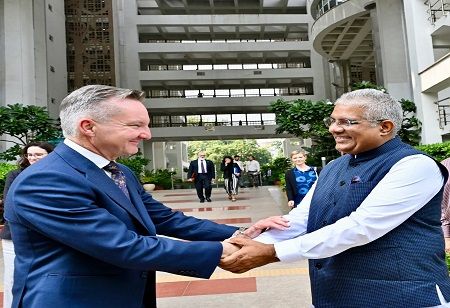
India and Australia discuss ways to deepen cooperation on climate action and energy during meetings in New Delhi between Union Environment Minister Bhupender Yadav, Union New and Renewable Energy Minister Pralhad Joshi and Australian Climate Change and Energy Minister Chris Bowen. The discussions take place ahead of the upcoming Pre-COP meeting in Fiji and COP31 in Türkiye. Bowen also serves as President of the COP31 negotiations under the UN Framework Convention on Climate Change.
Yadav and Bowen review key priorities for the forthcoming climate negotiations, with discussions covering the agenda for the Pre-COP meeting and COP31. Yadav highlights India’s climate-action initiatives and reaffirms the country’s commitment to supporting Australia in its role as president of the COP31 negotiations.
Also read: PhonePe Gets Initial UAE Nod for Payment Licence Applications
Energy cooperation forms another major component of the India-Australia discussions. Joshi and Bowen examine opportunities to expand collaboration in renewable energy, energy storage, grid integration, green hydrogen, clean-energy supply chains and emerging technologies. Both sides identify complementary capabilities that can support practical partnerships and create opportunities for businesses and industries in the two countries.
The two countries already maintain an elevated India-Australia Renewable Energy Partnership covering solar photovoltaic technologies, solar supply chains, green hydrogen, energy storage, circular economy initiatives, renewable-energy investment and capacity building. Australia says the partnership is intended to support clean-energy industries, strengthen supply chains and develop skills for the renewable-energy workforce.
Bowen also highlights the role of renewable energy in strengthening energy security amid global supply disruptions. During his India visit, he points to cooperation in solar energy and green hydrogen, noting that Australia’s research capabilities and India’s developing capacities can complement each other. He also highlights a Solar Academy in Gujarat that is expected to train 2,000 solar technicians.
Ahead of COP31, Australia identifies electrification, climate finance for vulnerable developing countries and the importance of oceans among its negotiating priorities. Bowen says adaptation and resilience also remain important elements of the climate discussions, particularly for countries vulnerable to climate-related impacts.
Also read: How AI is Transforming Manufacturing beyond the Factory Floor
Joshi also invites Bowen and Australian businesses to participate in the Bharat Renewable Energy Summit and Expo scheduled to take place in New Delhi in November. The engagement further supports efforts to expand investment, technology cooperation and commercial partnerships between the two countries in the clean-energy sector.
The latest discussions underline the expanding India-Australia partnership in climate action and clean energy, with both sides focusing on renewable technologies, energy security, green hydrogen and practical cooperation ahead of COP31.