India and Sri Lanka Step Up Coast Guard Maritime Cooperation
India and Sri Lanka strengthen Coast Guard cooperation through discussions on maritime security, search and rescue, pollution response, law enforcement and operational capacity building.
The Indian Coast Guard (ICG) and Sri Lanka Coast Guard (SLCG) have reaffirmed their commitment to strengthening bilateral maritime cooperation, with a focus on maritime safety, security and environmental protection across the Indian Ocean Region. The two forces held their ninth High-Level Meeting (HLM) at Mirissa, Sri Lanka, to discuss areas of mutual interest and improve operational coordination.
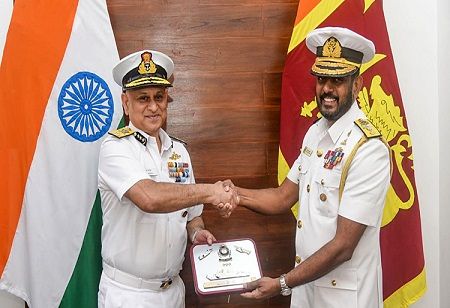
The Indian delegation was led by Paramesh Sivamani, Director General of the Indian Coast Guard, while the Sri Lankan delegation was headed by Rear Admiral Ruwan Rupasena, Director General of the Sri Lanka Coast Guard. The meeting provided a platform for both sides to review shared maritime challenges and explore ways to strengthen institutional engagement.
Also Read: Why More Industries Are Switching to Doorstep Fuel Delivery Services
Discussions focused on three key areas: Marine Pollution Response, Maritime Search and Rescue (SAR), and Maritime Law Enforcement. These areas are important for addressing emergencies at sea, protecting marine ecosystems and ensuring the safety of vessels and people operating in the two countries' shared maritime domain.
Both delegations also explored opportunities to expand capacity-building programmes and technical assistance. These initiatives are intended to improve the operational capabilities of the two Coast Guards through greater cooperation, knowledge sharing and the exchange of technical expertise. Stronger institutional capabilities can support more effective responses to maritime incidents and improve coordination between personnel from both forces.
Marine pollution response was among the central areas discussed, reflecting the importance of protecting the marine environment from incidents that can affect coastal communities, fisheries and maritime activities. Improved coordination in this area can help the two agencies respond more effectively to pollution emergencies and support efforts to maintain cleaner waters.
Search and rescue cooperation also remains a significant priority, particularly in responding to distress situations involving vessels and individuals at sea. Closer operational engagement can strengthen preparedness, facilitate coordinated rescue efforts and improve the effectiveness of emergency responses. Cooperation in maritime law enforcement is equally important for addressing security challenges and maintaining order across regional waters.
Also Read: Will GST Reforms Create a New 'Sub-₹10 Lakh Tech Car' Segment?
During the deliberations, both sides reiterated their commitment to working together to address emerging maritime challenges. They emphasised the need for coordinated responses to maritime contingencies and stronger cooperation in safeguarding the shared maritime domain.
The meeting reflects the continuing maritime partnership between India and Sri Lanka, whose geographical proximity makes cooperation essential for regional stability and maritime security. By strengthening operational coordination, technical assistance and capacity building, the two Coast Guards aim to contribute to a safe, secure and environmentally protected Indian Ocean Region.