India, Japan discuss West Asia tensions, Hormuz Strait
- Jaishankar and Japanese FM Motegi discuss West Asia situation and Strait of Hormuz security.
- Both stress freedom of navigation and uninterrupted energy flow.
- Reflects growing India-Japan convergence on maritime and regional stability issues.
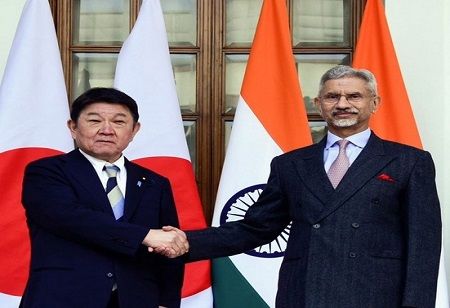
On a phone call with Japanese Foreign Minister Takeshi Motegi today, External Affairs Minister S. Jaishankar and a detailed talk on the changing situation in West Asia, especially the security and stability of the Strait of Hormuz, which they discussed. This is what MEA said in their statement.
The two ministers exchanged their views on the recent aggravation in the area and the possible effect on global energy supply and maritime trade routes. Jaishankar conveyed India's worries about a disrution in the Strait of Hormuz, which is a very important point of passage for the majority of India's crude oil imports. He called for all the parties to show restraint and guarantee the steady flow of energy and commercial shipping.
They also talked about the necessity to preserve the freedom of navigation and to respect the international maritime law. Besides, the two ministers touched the topic of regional stability more generally, including the situation in the Red Sea, which affects the global supply chains.
Also Read: India, Mauritius to Sign MoU on Delhi-Funded Infra Projects
The exchange of views also indicates a significant step toward time-bound collaboration between India and Japan on the issues of security of Indo-Pacific and West Asian regions. Japan, being one of the biggest energy-importing countries, undoubtedly shares India's concern to the stability of main maritime routes.
Besides cooperating with other members of the Quad and via bilateral dialogues, the two countries have been intensifying their level of cooperation in the field of maritime security and protection of critical infrastructure.
The conversation took place when the whole world's attention has been fixed on the Strait of Hormuz due to the recent events that led to fears of disruption in supply and soaring costs for shipping insurance.