India, Korea Push to Narrow Rising Bilateral Trade Gap
Synopsis: India and South Korea are holding a fresh round of CEPA negotiations to address India’s widening trade deficit, reduce non-tariff barriers, and strengthen bilateral trade and economic cooperation.
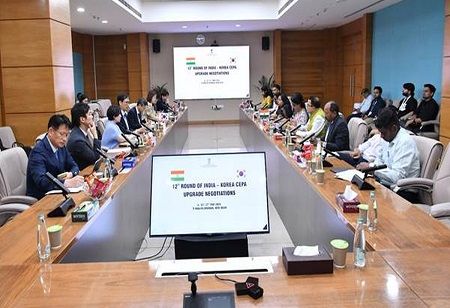
India and South Korea have begun a new round of negotiations to upgrade their Comprehensive Economic Partnership Agreement (CEPA), with both countries focusing on addressing India’s growing bilateral trade deficit and improving the overall balance of trade relations. The discussions mark the 12th round of negotiations aimed at modernising the free trade agreement that came into force in January 2010.
The three-day negotiations are taking place amid increasing concerns within India over the widening trade imbalance with South Korea. Official data shows that India’s trade deficit with South Korea rose to nearly $15.35 billion in 2025-26, compared to $15.2 billion in the previous financial year. While India’s exports to South Korea increased modestly to around $6 billion, imports from Korea continued to remain significantly higher at over $21 billion.
Commerce and Industry Minister Piyush Goyal has previously stated that the existing CEPA framework has not adequately served India’s interests and has contributed to the expanding trade gap. During earlier discussions with his South Korean counterpart Yeo Han-koo, Goyal proposed considering a fresh and more contemporary bilateral trade agreement that better reflects current economic realities and addresses persistent concerns related to market access and trade imbalances.
Also read: India Restricts LPG Access for PNG Household Users
Indian exporters have consistently raised concerns regarding non-tariff barriers in the South Korean market. Industry experts point to stringent quality standards, regulatory procedures, and certification requirements that often make it difficult for Indian products to gain wider access in Korea. The ongoing negotiations are therefore expected to focus on easing such barriers while also improving customs procedures, rules of origin verification, and trade facilitation mechanisms.
Both countries are simultaneously aiming to significantly expand bilateral trade over the coming years. India and South Korea have set a target of increasing two-way trade to nearly $54 billion by 2030 from the current level of approximately $27 billion. The upgraded CEPA is expected to play a central role in achieving this target by encouraging investments, improving supply-chain cooperation, and expanding trade in goods and services.
Officials indicate that the review process may also include discussions on deeper liberalisation across sectors, enhanced data-sharing arrangements, and mechanisms to ensure smoother implementation of the agreement. Analysts believe a revised trade framework could help strengthen economic ties between the two Asian economies while creating a more balanced and mutually beneficial partnership.