.jpg)
India, Singapore Boost Energy Investment and Power Links
India invites Singaporean investment in renewable energy, transmission and storage while exploring a 2,000 MW cross-border power link and cooperation in green hydrogen, energy efficiency and clean energy technologies.
India and Singapore have agreed to deepen energy cooperation under their Comprehensive Strategic Partnership, with discussions covering cross-border electricity connectivity, renewable energy investment, battery storage and emerging clean energy technologies. The discussions took place during Singapore International Energy Week (SIEW) 2026, held from October 26 to 28, as India invited long-term Singaporean investment in its expanding energy infrastructure sector.
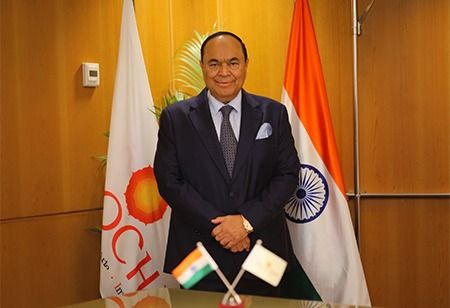
Union Minister of State for Power and New and Renewable Energy Shripad Yesso Naik met Singapore’s Minister of State for Foreign Affairs, Energy and Trade and Industry Gan Siow Huang on the sidelines of the event. The two sides discussed energy cooperation under their bilateral partnership, including a proposed cross-border electricity interconnection intended to support regional power trade and strengthen energy security.
Also Read: Meeting Global Paint Standards: VOC Rules & Environmental Norms
Naik invited Singaporean investors to explore opportunities in India’s transmission infrastructure, renewable energy projects, pumped-storage hydropower and battery energy storage systems. The discussions also covered green hydrogen and ammonia, energy efficiency and potential partnerships between Indian power equipment manufacturers and Singaporean utilities. These areas could support technology exchange, infrastructure development and investment as both countries pursue their energy transition objectives.
The proposed electricity interconnection forms part of broader efforts to improve regional energy connectivity. India and Singapore have been exploring a potential 2,000-megawatt power link through Southeast Asian countries, with a possible transmission corridor connecting Imphal to Singapore via Myanmar, Thailand and Malaysia. If developed, the project could facilitate cross-border electricity trade and improve the integration of clean energy resources across participating markets. The initiative remains under consideration, with further planning required before implementation.
During his visit, Naik also highlighted India’s progress in expanding its electricity generation capacity. As of September 30, 2026, the country’s installed power capacity stood at 558.9 gigawatts (GW), of which approximately 308 GW, or 55%, came from non-fossil sources. India is working towards achieving 500 GW of non-fossil fuel-based installed electricity capacity by 2030.
The minister also reviewed India’s hydropower cooperation with Bhutan, including progress on the 1,200 MW Punatsangchhu-I project and the operation of the 1,020 MW Punatsangchhu-II project. Discussions included future hydropower development and cross-border transmission planning through 2040.
Also Read: Two and Three-Wheeler EV Revolution in India
Separate meetings with the International Renewable Energy Agency (IRENA) and the International Energy Agency (IEA) focused on renewable energy financing, long-term energy planning, green hydrogen and capacity building. Naik also visited Sembcorp’s 326-megawatt-hour battery storage facility on Singapore’s Jurong Island and Keppel’s waste-to-energy plant in Tuas to examine technologies supporting energy storage and resource recovery.