Modi, Balendra Shah Hold Talks on Economy and Energy Ties
India and Nepal discuss a proposed US$2 billion assistance package, hydropower, rail connectivity, startups and infrastructure as Prime Ministers Narendra Modi and Balendra Shah seek to expand bilateral cooperation.
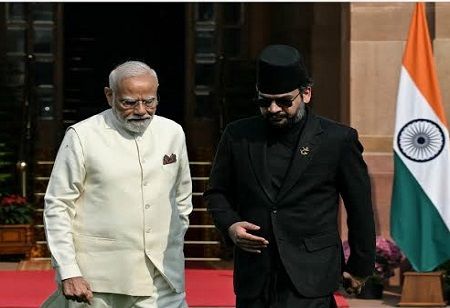
India and Nepal are exploring a broader economic partnership covering energy, hydropower, cross-border connectivity, infrastructure, technology and investment during Nepal Prime Minister Balendra Shah’s first bilateral visit to India. Shah held talks with Prime Minister Narendra Modi in New Delhi on November 23, 2026, with discussions aimed at strengthening cooperation and identifying new areas of partnership.
Shah's visit, which began on November 22, is his first bilateral foreign trip since taking office in March. He is accompanied by a 34-member delegation, including Finance Minister Swarnim Wagle, Foreign Affairs Minister Shisir Khanal and Chief Adviser Kumar Byanjankar. A separate business delegation is also participating in the visit.
Also Read: Advanced high-strength steel: The Key to Future-Ready Manufacturing
A major item on the agenda is a proposed economic assistance package of up to US$2 billion for Nepal's post-flood reconstruction and infrastructure development. Discussions are expected to cover the funding structure, including grants, concessional loans and lines of credit. The two countries are also reviewing opportunities to expand hydropower development and long-term electricity trade. An existing agreement envisages India importing up to 10,000 MW of electricity from Nepal over 10 years.
Cross-border rail and air connectivity are other priorities. The leaders are set to virtually inaugurate the Saryu-Kamala Express, a passenger service connecting Ayodhya Cantonment in Uttar Pradesh with Janakpur Dham in Nepal. Regular operations are scheduled to begin on November 28. The 604-km route is expected to facilitate religious tourism and strengthen transport links between the two countries. Discussions also include the proposed Raxaul-Kathmandu railway connection and improved air routes.
The bilateral agenda further covers education, healthcare, agriculture, sports, disaster management, climate resilience and human resource development. Both sides are exploring the possibility of establishing an Indian Institute of Technology (IIT) campus in Nepal and expanding startup support through the India-Nepal Startup Partnership Network, which has provided training and mentorship to Nepali entrepreneurs.
The visit also includes a Nepal-India Business Forum to encourage investment and commercial engagement. India remains Nepal's largest trade, transit and investment partner, with bilateral cooperation spanning infrastructure, energy and cross-border transportation.
Also Read: How Automation is Transforming the Food Processing Equipment Industry
The discussions are intended to provide direction for the next phase of India-Nepal relations, with both governments seeking to expand economic engagement and cooperation across strategic and development sectors.