PLI-ACC Scheme Fuels India's Battery and Minerals Strategy
- PLI-ACC scheme targets 50 GWh domestic battery manufacturing.
- National Critical Minerals Mission secures key mineral supply.
- Policy boosts self-reliance in energy storage value chain.
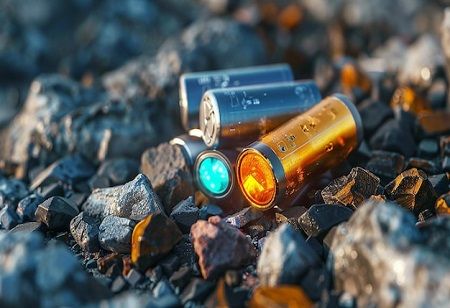
India is taking bold measures to develop a strong local battery manufacturing ecosystem and ensure the supply of critical minerals that are essential for the energy transition and carbon-free transportation. The Production Linked Incentive (PLI) Scheme on Advanced Chemistry Cell (ACC) battery storage is at the core of this push, which is formally referred to as the National Programme on ACC Battery Storage.
With a total budget of ₹18,100 crore, the programme approved in May 2021 aims at creating 50 GWh of ACC production capacity in India. The project is expected to not only drive domestic value addition but also lower import dependence and position India as a global leader in the manufacture of advanced batteries.
Under the PLI initiative, companies have lined up plans to build battery cell plants, with lead players citing for example, Reliance New Energy Battery Limited, have inked agreements for production facilities which together account for a major part of the target capacity. Specifically, contracts signed in the beginning of 2025 accorded 10 GWh capacity to Reliance, thus raising the total capacity AA already set for about 40 GWh would now amount to 50 GWh.
Also Read: India Eases Business Visa Norms for Chinese Experts
This programme offers manufacturers the option of different technologies and incentive recipients would be asked to add domestic content which would attract more innovation and capital expenditure in cell production. Along with the battery manufacturing push, the government has unveiled the National Critical Minerals Mission (NCMM) funded with ₹16,300 crore for the period that covers the years from 2024-25 to 2030-31.
The programme is committed to providing long-term access to key minerals like lithium, nickel, and cobalt that are necessary for batteries, clean energy technologies, and high-tech industries. Besides the Geological Survey of India (GSI), the National Mineral Exploration and Development Trust (NMEDT) is publishing new projects with a view to opening new exploration areas.
And a few mineral blocks have been put up for auction to speed up resource development. Other measures include inducements to promote mineral recovery from waste and the building up of recycling facilities. Together, these measures the PLI-ACC scheme and the NCMM tell the story of India's game plan in storing energy and mining for crucial materials domestically so as to propel e-mobility, renewable integration, and maintain competitive strength in the industrial sector.