
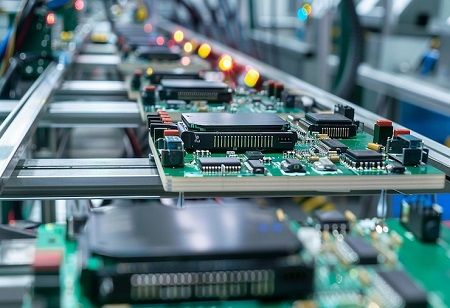
ROHM, Tata Electronics Partner for Power Semiconductor Manufacturing
- ROHM-Tata Electronics partner for power semis in India
- Initial focus: Assemble automotive-grade Si MOSFET by 2026
- Builds resilient supply chain; explores advanced packaging
ROHM Co. Ltd., a Japanese semiconductor giant, and Tata Electronics, an Indian company, have combined their efforts to create power semiconductors locally with a target for both the Indian and the global markets. The partnership aligns ROHM's advanced device and process technologies with the cutting, edge assembly and testing capabilities of Tata Electronics to a supply chain that is resilient and a business that is expanding in Japan, India semiconductor. salamOrganization of the Japanese semiconductor industry and the Indian market.
Firstly, Tata Electronics will be assembling and testing the automotive, grade N, channel 100V, 300A silicon MOSFET of the India, designed by ROHM in a TOLL package at its facility in Jagiroad, Assam, with mass production shipments scheduled for 2026. Moreover, the partners intend to work together on the development of the high, value packaging technologies and to jointly promote the products by the combined sales networks.
Also Read: Tata Taps Intel as First Customer for $14bn Chip Venture
ROHM's Kazuhide Ino, Member of the Board and Managing Executive Officer said: "Through this partnership, we can increase our range of packaged products that are factory made in India and also create a sustainable supply chain that is region, based." Tata Electronics CEO and MD Randhir Thakur said: "By our plants, we will facilitate ROHM to make local products for India and global markets thereby increasing the trust and strength of the supply chain."
The move is in line with India's "Make in India" and "Designed in India, Manufactured in India" goals, which are aimed at increasing the domestic value addition with Tata Electronics' investments going ona $11 billion fab in Dholera, Gujarat, and $3 billion OSAT in Assam. It elevates India on the global semiconductor ecosystem map to serve sectors like automotive, consumer electronics, IoT, AI, defence, and aerospace.