India, Canada Reset Ties with Landmark Nuclear Deal
- India and Canada restore ties, signing a 10-year nuclear energy pact and agreements in tech, defence, and education
- Leaders aim to finalize a long-delayed free trade deal by 2026, targeting $50B in bilateral trade
- Launch of energy partnership and collaboration on AI, semiconductors, and renewable energy
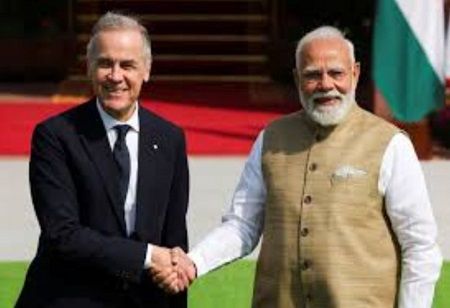
India and Canada have established several agreements, which include a groundbreaking 10-year nuclear energy agreement that follows diplomatic discussions between Prime Ministers Narendra Modi and Mark Carney in Delhi, which aimed to restore their damaged relationship.
The India Canada nuclear deal marks an India Canada landmark agreement, strengthening the nuclear energy partnership India Canada, signalling an India Canada bilateral ties reset through a uranium supply agreement, expanded civil nuclear cooperation, and renewed India Canada strategic relations.
The leaders reached an agreement to work together on technological advancements while exploring critical mineral resources, space research, defense operations and educational initiatives.
Carney announced that both nations will finalize their suspended free trade agreement by 2026, which both nations aim to achieve because they want to decrease their risk of facing American tariff penalties.
After Carney's predecessor made a connection between Delhi and the 2023 assassination of Sikh separatist Hardeep Singh Nijjar in Canada, the relationship between the two countries experienced a major decline because the accusation had been denied by Modi's administration.
The two countries experienced a diplomatic freeze, which resulted in both nations expelling diplomats from their countries and stopping all visa processing activities. Carney took office last year, and his administration has started to engage again with India because his government believes that India does not present any current violent dangers to Canada.
Also Read: India, Canada Ink $1.9bn Landmark Uranium Supply Deal MoU
The Delhi meeting, through Modi's statements, confirmed the existence of a "landmark deal" which included uranium supply and joint research on small modular reactors and advanced reactor technology.
The two leaders confirmed their commitment to work together on artificial intelligence, supercomputing, semiconductor development and renewable energy projects. Carney identified Canada as an essential partner who would help India obtain nuclear fuel while establishing a strategic energy partnership.
The leaders established a trade relationship which would reach a value of $50 billion between India and the United States while Carney worked to complete the economic partnership agreement, which had been under discussion for 15 years.
The analysts believe that the two parties have resumed their contact because of practical reasons which result from changing geopolitical conditions and their shared economic objectives.
The Canadian public supports diplomatic relations with India, according to polling data, which shows growing popularity for stronger ties with India. Carney travels to Australia and Japan as part of a comprehensive plan that will help him develop new trading partnerships and secure foreign direct investment.