
India Has Potential for 102 GW of Floating Solar Power
Synopsis: India identifies a 102 GWp floating solar potential across water bodies, opening new opportunities for renewable energy expansion, reducing land constraints, and supporting the country’s clean energy transition goals.
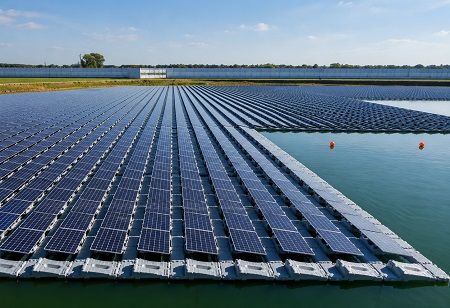
India has identified significant potential for expanding floating solar energy projects, with the government estimating that the country can develop around 102 gigawatt-peaks (GWp) capacity through installations on reservoirs and other water bodies. The assessment highlights a new opportunity for accelerating renewable energy growth while addressing challenges related to land availability.
The floating solar potential assessment is prepared by the National Institute of Solar Energy (NISE) under the Ministry of New and Renewable Energy. The findings indicate that water surfaces across the country can support large-scale floating photovoltaic projects, enabling India to make better use of existing resources for clean power generation.
Union Minister for New and Renewable Energy Pralhad Joshi states that floating solar projects are becoming an important component of India’s renewable energy strategy. The government is working on introducing a dedicated scheme to encourage the deployment of floating solar systems across different regions.
Floating solar technology allows photovoltaic panels to be installed on water surfaces such as reservoirs, helping reduce dependence on land-based solar parks. These projects can support energy generation while also offering benefits such as efficient use of unused water areas. The initiative aligns with India’s broader objective of increasing renewable energy capacity and promoting sustainable development.
Also read: PM Modi to Visit France, Slovakia from June 13–18
The assessment identifies a floating solar potential of more than 102 GWp, which contributes to India’s overall assessed solar potential of approximately 3,445 GWp. States with extensive water resources emerge as major contributors to this opportunity, creating possibilities for regional clean energy development.
The government’s renewable energy push continues to expand through various programmes focused on solar adoption, manufacturing, and public participation. India has significantly increased its non-fossil fuel energy capacity over the past decade, strengthening its position as one of the world’s leading renewable energy markets.
Floating solar projects are expected to play an important role in supporting India’s energy transition by combining technological innovation with sustainable resource management. By utilizing water bodies for electricity generation, the country aims to create additional clean energy capacity while moving closer to its long-term climate and energy goals.
The development of floating solar infrastructure also creates opportunities for investment, research, and domestic manufacturing. With growing policy support and technological advancement, India is moving toward a diversified renewable energy ecosystem that balances economic growth with environmental sustainability.