India Joins U.S.-led Pax Silica Strategic Tech Coalition
- India and the US signed the Pax Silica agreement to derisk AI and semiconductor supply chains
- The initiative focuses on protecting sensitive technologies, building trusted ICT and AI ecosystems
- India’s participation attracts significant investments, including Microsoft’s $17.5 billion plan to expand AI infrastructure
The United States and India established the Pax Silica agreement recently to create a strategic partnership which protects their artificial intelligence and semiconductor supply chain.
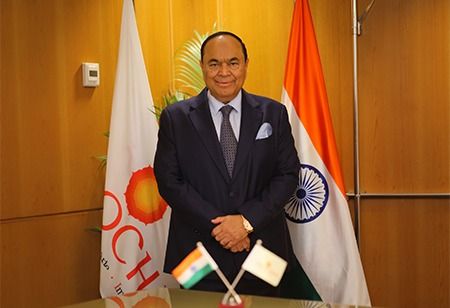
The US announced its tariff rollback of 25%, which now stands at zero, before New Delhi and Washington reach their interim trade agreement next month. At the AI Summit signing ceremony US Ambassador to India Sergio Gor described Pax Silica as a coalition that replaces "coercive dependencies" with positive-sum alliances anchored in trusted industrial bases.
India Pax Silica coalition strengthens the US led Pax Silica initiative, advancing the India US tech partnership and semiconductor coalition Pax Silica, while reinforcing the strategic technology alliance India US, promoting global semiconductor cooperation, enhancing India technology security partnership, supporting the critical minerals and chip alliance, as India joins tech coalition US and participates in the emerging tech alliance India.
Gor stated, “India’s entry in Pax Silica is not just symbolic, it’s strategic and essential. India is a nation with deep talent, deep enough to rival challengers. India’s engineering depth offers critical capabilities for this vital coalition. India has made important strides in critical minerals processing capacity, and India and the US are engaged”.
“We can share AI technology with the world, and especially with partners like India. Critically, India brings strength. Peace does not come from hoping that adversities will play fair. We all know they are wont. Peace comes through strength, and India understands this. India understands strong borders. That strength that sovereignty, is exactly what Pax Silica amplifies”, he added.
The US State Department states that the initiative protects sensitive technologies and critical infrastructure from foreign control and establishes secure technology environments that include ICT systems, fibre-optic networks, data centres, AI fundamental models and applications.
Also Read: India-US Trade Deal to Boost Cotton Demand, Says Goyal
The Indian government prohibits foreign entities from participating in vital infrastructure projects, including telecommunications systems, because this policy matches the Western goal of decreasing their reliance on China, which serves as a vital link in worldwide supply chains but becomes more dangerous with each passing day.
The organization Pax Silica establishes partnerships through joint ventures while providing strategic investment options that enable India to develop worldwide AI infrastructure by utilizing international funding and collaboration agreements.
The US State Department stated, “The initiative responds to growing demand from partners to deepen economic and technology cooperation with the United States and understanding that AI represents a transformative force for our long-term prosperity. Recognition that trustworthy systems are essential for safeguarding our mutual security and prosperity”.
Experts observe that AI development and semiconductor manufacturing require participating nations to provide essential components throughout their value creation processes. The United States controls all aspects of chip design and its corresponding intellectual property rights, while the Netherlands supplies essential lithography equipment which enables chip production processes.
“We also recognise that artificial intelligence (AI) represents a transformative force for our long-term prosperity and that trustworthy systems are essential to safeguarding our mutual security and prosperity. We believe that economic value and growth will flow through and across all levels of the global AI supply chain, driving historic opportunity and demand for energy, critical minerals, manufacturing, technological hardware, infrastructure, and new markets not yet invented”, added the US State Department.
Microsoft has made a $17.5 billion investment commitment to develop artificial intelligence infrastructure and cloud computing capabilities in India over four years after the country joined the partnership, which already received substantial backing from other investors who planned to finish their work by 2026. The agreement establishes India as a vital partner for building trustworthy technology supply routes, which will enhance domestic AI and semiconductor development.