India, US Sign Critical Minerals, Rare Earths Pact
Synopsis: India and the United States sign a critical minerals and rare earths partnership to strengthen resilient supply chains supporting semiconductors, electric vehicles, renewable energy, and advanced manufacturing technologies.
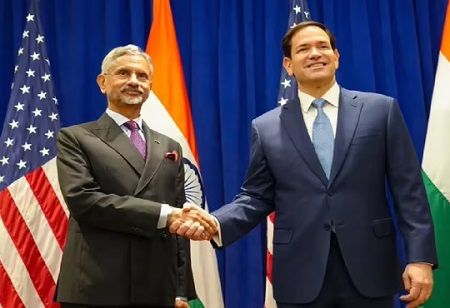
India and the United States have finalised a strategic partnership on critical minerals and rare earths, strengthening cooperation in securing supply chains for materials essential to semiconductors, electric vehicles, defence systems, renewable energy, and advanced technologies. The agreement reflects growing global competition to secure reliable access to critical resources amid rising geopolitical tensions and supply chain disruptions.
The pact focuses on collaboration across exploration, processing, refining, technology sharing, recycling, and long-term supply chain development for critical minerals including lithium, cobalt, nickel, graphite, and rare earth elements. Officials from both countries stated that the partnership aims to reduce overdependence on concentrated global supply sources and strengthen resilient industrial ecosystems.
India and the US are expected to work together on investment opportunities, research partnerships, and policy coordination to support mineral security and strategic manufacturing capabilities. The agreement also aligns with broader efforts under the India-US Initiative on Critical and Emerging Technology (iCET), which promotes cooperation in semiconductors, artificial intelligence, defence innovation, and clean energy technologies.
Also Read: India, Canada Target $50Bn Trade with New Deal
Critical minerals have become increasingly important for global economic and technological competitiveness due to their role in batteries, electronics, aerospace systems, wind turbines, electric mobility, and advanced defence equipment. Governments worldwide are accelerating efforts to secure alternative supply chains as demand for energy transition technologies rapidly expands.
For India, the partnership supports ambitions to strengthen domestic manufacturing under initiatives such as Make in India and expand capabilities in battery production, electronics, renewable energy, and electric vehicle ecosystems. India has been actively seeking international partnerships to improve access to raw materials and processing technologies needed for future industrial growth.
The United States is also intensifying efforts to diversify mineral supply chains and reduce strategic dependence on China, which currently dominates significant portions of global rare earth processing and critical mineral refining. Analysts view the India-US partnership as part of a wider geopolitical realignment shaping future technology and manufacturing supply networks.
Industry experts believe collaboration between the two countries could create new opportunities for mining investments, downstream manufacturing, recycling infrastructure, and technology innovation. The agreement may also encourage private-sector participation in critical mineral exploration and processing projects across multiple regions.