PM Modi's July 4 Rajasthan, Gujarat Visit to Boost Development
Synopsis: Prime Minister Narendra Modi will visit Rajasthan and Gujarat on July 4 to inaugurate and lay the foundation stone for projects worth over ₹1.06 lakh crore, spanning aviation, petrochemicals, semiconductors, transport, and energy.
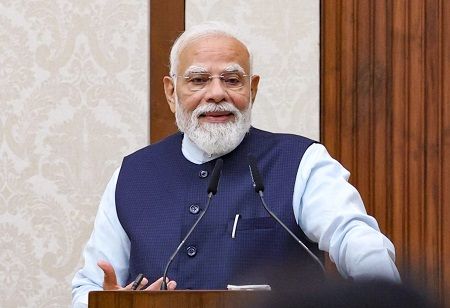
Prime Minister Narendra Modi, will be on a one day stop in Rajasthan and Gujarat on July 4. During the visit he will inaugurate and dedicate and also lay the foundation stone for development ventures that are worth above ₹1.06 lakh crore. These initiatives cover several major spaces such as aviation, petrochemicals, railways, highways, city mobility, renewable power, power transmission, plus semiconductor making, showing how the government keeps its emphasis on bettering India’s infrastructure and industrial strength.
The visit is set to kick off from Jodhpur, Rajasthan, where the Prime Minister will inaugurate the brand new terminal building at Jodhpur Airport. He is also expected to launch the Modified UDAN Scheme, basically the next phase of India’s regional connectivity programme, meant at expanding low-cost air travel and boosting access for regions that are not well served. With a planned outlay of ₹28,840 crore across the next ten years, the refreshed programme is looking to develop about 100 new aerodromes, build 200 helipads, reinforce regional airports and also back airline operations via viability gap funding. This initiative further pushes homegrown aviation platforms, aligning with the Atmanirbhar Bharat vision.
From Jodhpur, the Prime Minister will move towards Balotra, where he will dedicate, inaugurate and also lay the foundation stone for a set of projects worth around ₹1.06 lakh crore, before he addresses a public gathering. One of the big takeaways of the visit will be the dedication of India’s first Greenfield integrated Refinery-cum-Petrochemical Complex at Pachpadra.
This complex, brought to life by HPCL Rajasthan Refinery Limited, is expected to ramp up the refining capability within the country, help in strengthening India’s energy security, and bring in meaningful jobs alongside industrial momentum for the region.
In Rajasthan, the infrastructure package also has projects tied to highways, rail connectivity, power transmission, renewable energy, and urban development stuff. They are expected to make logistics a bit smoother, strengthen industrial groundwork, enhance regional connection links, and generally back sustainable economic growth across the whole state.
Also read: Adani, UAE's IHC Plan $11.5 Billion Odisha Aluminium Project
Later on, Prime Minister Modi will head to Sanand in Gujarat where he will inaugurate the CG Semi Outsourced Semiconductor Assembly and Test (OSAT) facility. This chip related unit is seen as helping reinforce India’s semiconductor manufacturing ecosystem and it should nudge the country’s bigger goal of becoming a global center for electronics production and advanced know how. After the inauguration, the Prime Minister will also speak to a crowd that gathers there.
During the visit, it became clear that the government is really focusing on speeding up industrialisation, mainly by putting money into strategic areas like semiconductors, petrochemicals, aviation, and clean energy. The expectation is that these efforts will boost manufacturing strength, make supply chains more steady , and also open up jobs in the process, all while backing India’s longer- term economic growth plan.
The Modified UDAN scheme, refinery project, and semiconductor facility together mark important milestones in India’s infrastructure development strategy, and it feels like they’re pointing in the same direction. These initiatives are basically meant to boost regional connectivity expand industrial capacity, invite more private investment, and push technological advancement across several sectors at once.
The Prime Minister’s engagements in Rajasthan and Gujarat also point to the government’s clear resolve for balanced regional development, mainly by backing infrastructure in both urban districts and industrial centres. With better transport pathways and energy infrastructure, along with stronger manufacturing capability, economic momentum is set to rise and overall competitiveness should improve across the western part of India.
With the launch of these projects, India continues to move forward with its idea of becoming a globally competitive manufacturing and infrastructure powerhouse, honestly. The investments that were announced during the visit are expected to support economic development in a meaningful way, also technological innovation and employment generation, and eventually a more sustainable growth curve in the coming years.