Rajnath Singh Clears DRDO Missile Tech Transfer to Industry
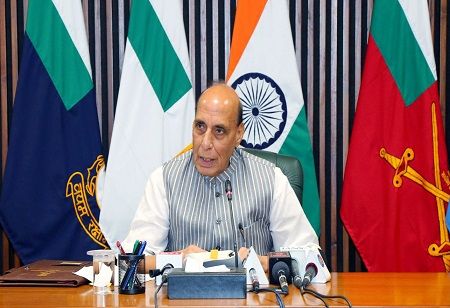
Defence Minister Rajnath Singh approves the transfer of DRDO technologies for all conventional missile systems to Indian defence industries. The move aims to boost indigenous production, reduce import dependence and expand private-sector participation.
Defence Minister Rajnath Singh has approved the transfer of technology for all conventional missile systems developed by the Defence Research and Development Organisation (DRDO) to Indian defence industries for domestic production. The decision is aimed at strengthening indigenous defence manufacturing and advancing India’s push for self-reliance in critical military technologies.
Under the move, eligible Indian companies will be able to undertake the production of DRDO-developed conventional missile systems, subject to the required qualifications, certifications and regulatory approvals. The initiative is expected to expand the role of domestic manufacturers in the defence ecosystem and create greater opportunities for private-sector participation.
Also Read: Global Sugar Market Trends: What Indian Manufacturers Must Know
The technology transfer forms part of the government’s broader Aatmanirbhar Bharat strategy, which seeks to reduce dependence on imported defence equipment and build stronger domestic capabilities across the defence value chain. By enabling Indian industry to manufacture technologies developed by DRDO, the government aims to accelerate the transition from indigenous research and development to large-scale production.
The initiative is also expected to benefit the wider defence industrial base, including micro, small and medium enterprises (MSMEs). Greater participation from domestic companies can help expand manufacturing capacity, develop specialised capabilities and create a deeper network of suppliers and technology partners.
DRDO has increasingly focused on transferring its technologies to Indian industry to support commercial production and strengthen the link between defence research and manufacturing. The organisation had already completed more than 1,800 technology transfers to Indian public- and private-sector companies by the end of 2024, with several technologies being made available under a zero technology-transfer fee framework for eligible development and production partners.
The latest approval takes this approach further by covering technologies associated with conventional missile systems. It is expected to provide Indian manufacturers with access to proven defence technologies while reducing the time and resources required to develop equivalent systems independently.
Also Read: How to Start a Spice Manufacturing Business
The decision also has implications for India’s defence supply chain. Increased domestic production can support the development of local component manufacturers, engineering firms and specialised technology providers, while potentially improving the scalability and availability of indigenous missile systems for the armed forces.
For the defence industry, the transfer creates opportunities to participate more actively in the production of advanced weapon systems and develop capabilities that can eventually support exports. For the government, it reinforces the objective of building a competitive domestic defence manufacturing ecosystem.
The approval therefore represents another step in India’s effort to connect defence research with industrial production, strengthen domestic capabilities and reduce reliance on overseas suppliers.