US, India Expand Defence and Civil Nuclear Cooperation
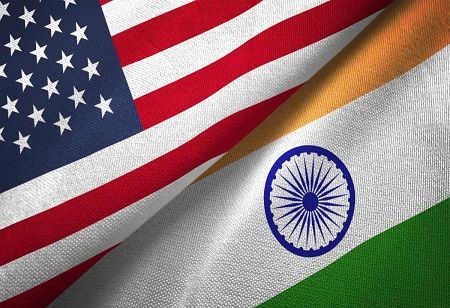
The US and India are expanding cooperation in defence, civil nuclear energy, trusted AI, and emerging technologies, strengthening strategic ties, resilient supply chains, innovation, and economic growth under their Comprehensive Global Strategic Partnership.
In addition to collaboration in the areas of defense, civil nuclear power, trusted AI, and other future technologies, the strategic alliance between the United States and India is also being enhanced through greater cooperation, US Assistant Secretary of State for South and Central Asian Affairs S. Paul Kapur has said. Addressing a roundtable event organized by Hoover Institution in the United States on India, Kapur pointed out that such cooperation was a result of common efforts to build economic resilience and technological innovation.
It was stated by Kapur that according to the Trump administration, India is one of the key partners in the Indo-Pacific region and there are efforts being made by the administration for expanding collaboration with India in key areas. This collaboration is proving fruitful in creating employment in America as well as developing supply chain networks which are important for both countries as well as the entire region. The collaboration now focuses more on high technology areas such as AI etc.
Also read: Nepal Eases ₹200, ₹500 Note Rules for Indian Travellers
The defence partnership constitutes another key pillar of the India-US relations. The two countries have just renewed their agreement on a defence partnership which is intended to boost the capability of joint operations between India and the US in the domains of land, sea, air, space, and cyber security. In the last two decades, India has been importing US defence items, such as the Apache and Chinook helicopters, the C-17 and C-130J transport planes, the P-8I maritime patrol aircraft, and the M777 ultra-light howitzer guns.
Collaboration on civil nuclear energy is also making strides following recent policy changes in India. With the SHANTI Act coming into effect, which helps address liability issues, American companies are investigating possibilities of collaborating with their counterparts in India in civil nuclear energy projects. Early this year, a delegation of high-ranking officials from leading American firms dealing in nuclear energy traveled to India to explore collaboration possibilities in SMR technology.
In addition, the increasing cooperation between the two countries is also in terms of collaboration on critical and emerging technologies such as semiconductors, digital infrastructure, cybersecurity, and AI. Both the countries are striving towards creating a technology ecosystem that not only fosters innovation but is also resilient. This is in line with the overall India-US strategic vision of economic competitiveness and technological leadership.
Also read: How Electronic Manufacturing in India Drives Global Growth
The recent statements reiterate the increasing significance of the India–US Comprehensive Global Strategic Partnership, which has become one of the most important bilateral relations in the Indo-Pacific region. The increasing collaboration in the fields of defense, clean energy, civil nuclear technology, and innovations on the part of both India and the US would lead to the achievement of greater stability, economic development, and advancements in technology in the region.