National Startup Day 2026: How Startups are Redefining Tomorrow
Startup Day celebrates the spirit of innovation, entrepreneurship, and bold thinking that fuels economic growth and social progress. It brings together founders, innovators, investors, mentors, and ecosystem enablers to recognize the ideas that challenge conventions and address real-world problems across sectors such as technology, healthcare, sustainability, and education.
More than a celebration, Startup Day is a reminder of the resilience, creativity, and determination behind every startup. It encourages collaboration, learning, and innovation, reinforcing the belief that small ideas, when nurtured, can create a lasting impact on industries and society. This Startup Day let us honor the courage of entrepreneurs, reflect on the impact of innovation, and celebrate the resilient spirit that turns ideas into transformative ventures.
Amogh Giridhar, Associate Partner, Prequate Advisory
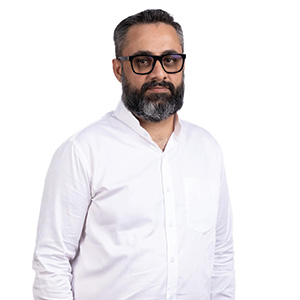 Global supply chains are at a critical juncture characterized by the need for agility and resilience. Indian manufacturing startups are at the forefront of this revolution, driven by their innovation. Startups are leveraging cutting-edge technologies to drive Build in India for India and the world, enhancing productivity and enabling sustainable, scalable processes.
We have witnessed first-hand how founders are overcoming execution challenges and are becoming an attractive category for early investors to have a look at. This is a change that Indian manufacturing has perhaps not seen in decades, and we are very optimistic for this to be the driving force behind India’s economic growth. India’s manufacturing startups will lead the world’s next Industrial wave creating jobs and boosting exports.
Here’s to empowering the bold and ambitious founders driving this change, enabling them to scale globally and establish the country as a manufacturing powerhouse.
Narendra Sen, Founder & CEO, RackBank & NeevCloud
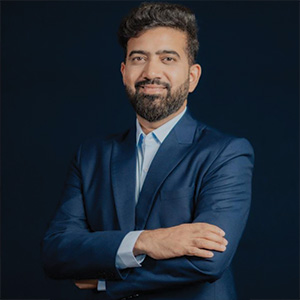 India’s startup ecosystem is pivoting from a phase of rapid experimentation to one of strategic scaling and sovereignty. As AI becomes the bedrock of innovation, mere access to the cloud is no longer enough - startups need high-performance, AI-ready infrastructure that is both indigenous and affordable.
To truly democratize AI, we must decentralize this power. Building robust, GPU-dense infrastructure in Tier 2 cities isn't just about cost efficiency; it's about enabling founders to build, train, and deploy locally while competing globally. The next unicorn shouldn't be limited by the cost of compute or data latency.
The future belongs to those who control their compute. By prioritizing sustainable, sovereign, and scalable digital infrastructure today, we are laying the foundation for India not just to consume AI, but to lead it.
Amit Chand, Founder, BYT Capital
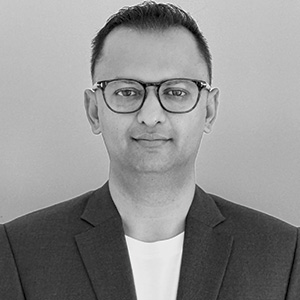 As India’s startup ecosystem continues to mature, there is an increasing focus on addressing hard, fundamental problems through meaningful innovation. Startups are increasingly being recognized not only as engines of growth, but also as contributors to responsible progress - where considerations around sustainability and inclusion influence how solutions are designed, scaled, and made relevant to a wider population. Together, these shifts highlight long-term thinking and durability as defining characteristics of India’s next phase of innovation, aligned with the vision of a Viksit Bharat.
Dr Mangala Devi, Director, Smile Baby IVF & K C Raju Multi Speciality Hospital,
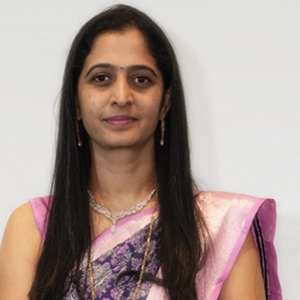 National Start-up Day reminds us that innovation begins with the courage to start. My brief yet enriching experience as a co-founder of Ferticare offered valuable insights into the start-up ecosystem — the passion, perseverance, and purpose required to build something meaningful from the ground up.
In healthcare, start-ups go beyond business; they aim to bridge gaps in care, improve access, and create real impact in patients’ lives. The journey teaches resilience, adaptability, and the importance of ethical, patient-centric innovation.
On this day, I salute every founder who dares to dream, every team that works relentlessly behind the scenes, and every start-up striving to transform ideas into solutions that truly matter
Akshay Shekhar, Co-Founder & CEO, Kazam,
 India’s startup ecosystem is at a pivotal moment. As founders, we are not just building companies, we are building markets and helping India become globally competitive in sectors that are still taking shape. In such environments, progress comes from agility, grit, and the courage to pursue audacious goals amid uncertainty. Enduring companies are built through the ability to execute at scale, learn rapidly from real-world constraints, and continuously earn the trust of customers and partners as unit economics and operating models evolve.
Once our startups grow, their influence extends beyond markets into the broader ecosystem. By solving real problems across infrastructure, regulation, and adoption and by sharing on-ground insights responsibly with industry and government, founders can help shape policy through evidence rather than advocacy. When ambition is matched with execution and collaboration, startups can do.
Vipanchi Handa, Co-founder and CPO of Novatr
 A decade ago, starting a venture was seen as a risky endeavour. Today, within India’s evolving startup ecosystem, entrepreneurship is recognised as a powerful way to solve problems at scale. Policy support has improved the ease of doing business, enabled digital-first and deeptech startups, and shifted mindsets from job-seeking to job creation. What this journey has made clear, however, is that sustainable growth is impossible without the right talent.
As we built Novatr, this insight became especially evident in the AEC sector, where technology has advanced far more rapidly than the way professionals are trained. The result is a widening gap between what the industry demands and what the workforce is equipped to deliver.
Closing this gap requires learning institutions and platforms to work closely with industry, move beyond rigid offline classrooms, and adopt hybrid models that translate emerging technologies into practical, continuous learning. If we get this right, the next decade will not just produce scalable companies, but a globally competitive, confident workforce ready to lead impact-driven innovation.
Rushil Shah, Managing Director at Shavo Technologies
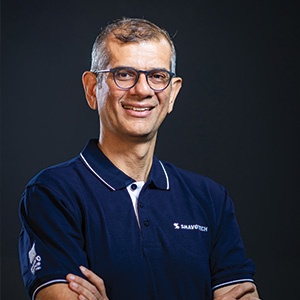 As Startup India marks its first decade, we are entering a far more consequential phase, one where Indian entrepreneurship must move from scale alone to engineering significance. The future will be defined by our ability to build deep technology capabilities that anchor India in critical global value chains.
Sectors like semiconductors, hydrogen, and aerospace reflect this shift. They demand precision, trust, and long term commitment, representing India’s opportunity to lead in advanced manufacturing and strategic technologies. AI and digital engineering will be foundational in this journey, enabling intelligent design, predictive manufacturing, and globally competitive, resilient supply chains.
Yet technology alone is not enough. The next decade must prioritize human capital, cultivating skilled talent, inclusive workplaces, and impactful institutions. If the first decade was about starting up, the next must be about building enduring capabilities that will define India’s technological leadership on the global stage.
Ankur Sachdeva, CEO & Co-Founder, Uppal Brewers and Distillers (UBD)
 Strengthening India’s manufacturing base is crucial to a Viksit Bharat, and manufacturing-based startups focused on consumer goods are vital to achieving the promise of self-reliance. We take enormous pride in being one amongst these. Specifically, the past few years have witnessed the introduction of several Made-in-India alco-bev brands. Not only are brands such as our expressions, Soorahi and Madhvan, leveraging the best of Indian talent, techniques, and tech, they are appealing to the Indian who prefers premium and experience-led choices, and rivalling well-entrenched global leaders in sophistication and scale. We are inspired by the over 70% startups today focused on expanding choice to consumers through innovation, AI, in everyday categories, and adding momentum to Startup India’s efforts in placing India-origin brands on the global map of the most coveted premium products.
Dr. Sanjay Katkar, Joint Managing Director at Quick Heal Technologies
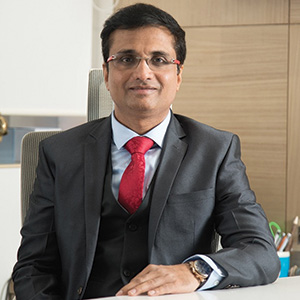 Start-ups as a subject is particularly close to my heart because they represent the courage and ambition of India’s innovators. Today, India’s startup ecosystem has crossed a remarkable milestone with more than 2 lakh DPIIT-recognized startups, collectively generating over 21 lakh jobs and powering entrepreneurship across sectors.
India’s startup ecosystem is a powerful reflection of the country’s innovation mindset which is fast moving, digital first, and increasingly global in ambition. As startups scale at speed, trust becomes their strongest differentiator. In a world where technology knows no borders, cybersecurity is no longer optional. It is fundamental to sustainable growth.
Prakash Ravindran, CEO & Director, InstiFi
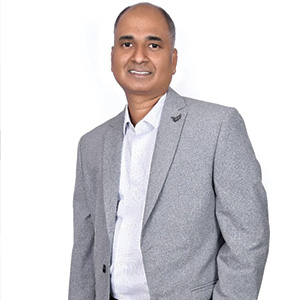 'India’s startup ecosystem is moving into a more mature phase. Long-term sustainability, regulatory discipline, and customer trust are becoming as important as innovation and scale. For fintech startups, success will depend on building strong foundations, secure infrastructure, transparent processes, and compliance-first operations. As the ecosystem evolves, startups that focus on solving real business challenges while maintaining governance standards will be better positioned to grow responsibly.
Harsha Solanki, VP GM Asia, Infobip
India’s startup ecosystem has become the third-largest hub globally, with over 6 lakh startups. Many of these are now emerging from tier 2 and tier 3 cities, focusing on reaching users across India. As innovation expands beyond metros, founders working in areas such as deeptech, agritech, AI, and Bharat-first solutions are navigating and addressing a unique set of challenges. Factors like building trust, ensuring connectivity, scaling communication, and offering language diversity often determine how quickly they can grow.
This National Startup Day, we celebrate India’s entrepreneurial spirit and its role in shaping a future-ready economy.