
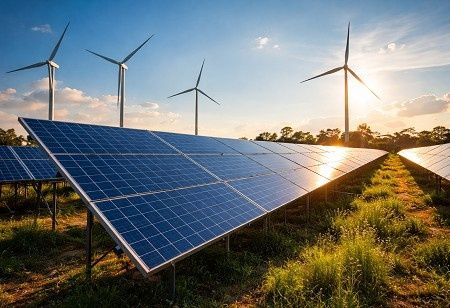
India Boosts Renewables push Amid Gas Disruptions
- India accelerates renewable push amid gas disruptions
- Coal plants ramp up output to meet peak power demand
- Focus on storage and wind to strengthen energy security
India's renewable energy efforts are picking up speed because natural gas supplies have been shaky lately. Tensions in west Asia keep messing with global energy routes, and that's pushing the country to act. The government wants stable power and less reliance on outside fuel sources.
Power Minister Shripad Naik says approvals for wind projects and battery storage are moving fast - Mainly to cover shortfalls. Iran's ongoing conflict has hurt gas access, showing just how risky it's to depend on imported fuel.
Natural gas makes up only about 2% of india's electricity mix, but during high-demand times, it supports up to 8 gigawatts. Right now, there isn't enough supply so officials are blending in more renewables with temporary use of fossil fuels.
In order to keep the power supply uninterrupted during the summer season when the temperature will be hot, the government has ordered coal-based power plants that have been instructed to run at full capacity and not to go for planned shutdowns.
Also Read: Gujarat Clears Tata Power Deal for Supply Resumption
Furthermore, a 4 GW imported coal-based power plant in Gujarat has been ordered for full capacity operation between April and June. Industries are also being urged to make use captive power generation to lessen the pressure on the grid.
All these steps clearly bring out the fact that coal is still the main source of power as it is responsible for almost 75% of electricity generation in India. However, the move towards renewables also indicates a change in the energy mix of India in the long run. The government is working to increase the resilience of the grid and lower the dependence on fossil fuels by promoting wind and storage projects.
The present state of affairs has brought back the very strong point of the need for the diversification of energy along with the investments in infrastructures that can support the irregular generation of renewables. All in all, these changes depict a two-pronged strategy-making use of conventional energy for the management of immediate supply problems and at the same time, moving towards more sustainable and secure energy systems.