India, Canada Begin Crucial Fifth Round of CEPA Trade Talks
India and Canada begin the fifth round of CEPA negotiations in Ottawa, aiming to conclude a trade agreement by year-end while expanding cooperation in energy, critical minerals, aerospace and AI.
India and Canada begin the fifth round of negotiations for the proposed Comprehensive Economic Partnership Agreement (CEPA) in Ottawa on October 5, as both countries accelerate efforts to conclude the trade pact by the end of 2026. The talks run from October 5 to 9 and mark another step in strengthening economic ties following a prolonged period of diplomatic strain.
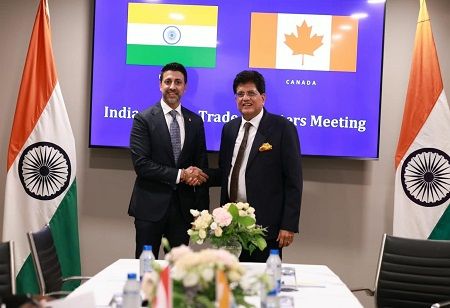
The latest round follows a meeting between Union Commerce and Industry Minister Piyush Goyal and Canadian International Trade Minister Maninder Sidhu on the sidelines of the G20 Trade Ministers’ Meeting in Milwaukee. The two ministers review progress in the negotiations and discuss the upcoming Ottawa round, with Canada reiterating its commitment to reaching a mutually beneficial agreement by the end of the year.
Also read: Piyush Goyal: India Builds Manufacturing Value Chains
Four rounds of CEPA negotiations have already been completed, with the fourth round concluding in New Delhi on September 18. Negotiators from both sides continue to work towards narrowing outstanding differences and maintaining momentum, with the shared objective of finalising the agreement before the end of 2026.
The proposed agreement comes as India and Canada seek to significantly expand bilateral economic engagement. Key areas identified for greater cooperation include energy, critical minerals, aerospace and artificial intelligence. Canada also views India as an important partner in its strategy to diversify trade beyond the United States.
Canada is targeting a substantial expansion in bilateral trade, with Ottawa aiming to double two-way goods and services trade with India to $70 billion annually by 2030. Total bilateral goods and services trade reaches $30.4 billion in 2025, while merchandise trade stands at $13.6 billion.
The economic relationship includes significant trade in both goods and services. Canadian merchandise exports to India total $3.9 billion in 2025, led by vegetables, mineral fuels and oils and wood pulp. Imports from India reach $9.7 billion, with precious stones and metals, machinery and pharmaceuticals among the major categories. Canada’s services exports to India stand at $15.2 billion, with education-related travel accounting for the largest share.
Also read: Why Global Companies are investing more in India's GCCs
The trade negotiations are also followed by a major Canadian commercial outreach to India. Sidhu is scheduled to lead a Team Canada Trade Mission from October 12 to 17, bringing nearly 300 Canadian business delegates from key sectors. The mission is intended to generate new commercial opportunities and strengthen business-to-business ties.
The latest developments signal renewed momentum in India-Canada economic relations, with the CEPA negotiations serving as a key mechanism for expanding market access, investment and sectoral cooperation. Both countries continue to target the conclusion of the agreement by the end of 2026.