Piyush Goyal: India Builds Manufacturing Value Chains
Commerce Minister Piyush Goyal says India is building manufacturing value chains from design to finished goods and has no structural excess capacity in sectors identified by the G20 presidency.
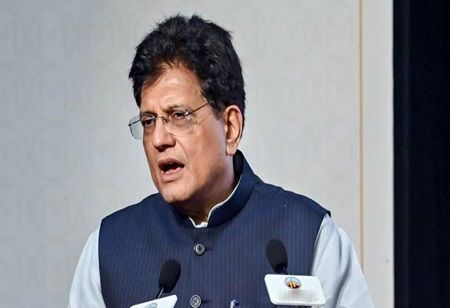
India is building manufacturing value chains spanning design to finished goods and emerging as a trusted link in global supply chains, Commerce and Industry Minister Piyush Goyal said at the G20 Trade Ministers’ Meeting in Milwaukee, United States.
Speaking on structural excess capacity and production during the concluding session of the meeting, Goyal said India is the fastest-growing large economy and has a domestic-demand-driven economy serving a population of around 1.4 billion. He said the country’s manufacturing capacity is aimed at meeting both domestic and global demand and that India does not have structural excess capacity in the sectors identified by the G20 presidency.
Also Read: How India can become a Global Manufacturing Hub by 2030
Goyal acknowledged concerns among G20 members that trade-distorting support in some economies can contribute to dumping and predatory pricing. He said such concerns should be addressed through measures consistent with World Trade Organization (WTO) rules, including anti-dumping and countervailing duties based on evidence and subject to judicial review.
The minister said industrial capacity itself should not be treated as the problem. According to him, distortions can emerge when production becomes geographically concentrated because of hidden subsidies and other forms of support. He also said diversification of production and supply chains is a legitimate objective, but should not be used to introduce measures outside WTO rules or shift the burden of adjustment onto developing economies.
Goyal further stressed the importance of preserving policy space for developing countries to industrialise and strengthen domestic manufacturing. He called for the sharing of trade-related statistics and data through existing mechanisms rather than creating parallel requirements.
On labour standards, Goyal reaffirmed India’s commitment to eliminating forced labour, describing the commitment as absolute and unconditional. He said the International Labour Organization remains the competent universal and tripartite institution for labour standards and supported voluntary exchanges of good practices among G20 members, provided these do not create new obligations or lead to unilateral trade action.
The minister also emphasised that India’s trade with G20 economies depends on a transparent, non-discriminatory and rules-based trading system. He highlighted the importance of Most-Favoured-Nation treatment and consensus-based decision-making within the WTO.
Also Read: Can India Lead the World in Intelligent Machine Manufacturing?
Goyal’s remarks come as India seeks to expand its role in global manufacturing and supply chains. During his US visit, he also invited American manufacturers to deepen their presence in India, partner with Indian small and medium enterprises and co-invest in advanced manufacturing to strengthen resilient supply chains.