India-US Trade Deal On Hold as Goyal Seeks Tariff Advantage
India keeps the interim US trade deal on hold as Piyush Goyal seeks tariff advantages over Vietnam, China and other Asian rivals, while Indian exports continue to grow and key sectors await improved US market access.
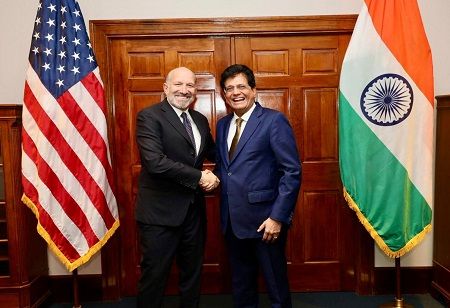
India is ready to finalise its interim trade agreement with the United States, but Commerce and Industry Minister Piyush Goyal says New Delhi is seeking a clear tariff advantage over competing economies before the pact becomes operational. The government maintains that Indian exporters need comparable or better market access than rivals such as Vietnam, Thailand, the Philippines, China, Malaysia, Bangladesh and Sri Lanka.
As per Goyal, these negotiations have already provided positive results on several difficult matters. Nevertheless, India seeks from Washington that a system of tariffs be put in place which provides Indian products an edge in the American market. It becomes important in the light of Indian companies competing against other Asian countries in the American market.
Also read: Sitharaman Meets Ajay Banga to Deepen India-World Bank Ties
In accordance with the interim agreement, the reciprocal duty imposed by the US on Indian products is reduced from 25% to 18%. The US also lifts a further 25% tariff based on Indian imports of oil from Russia, reducing the effective tariff rate from 50% to 18%.
As for India, the country is expected to agree to reduce or remove tariffs on a broad spectrum of American industrial, agricultural, and food products. The pact will also involve addressing issues related to non-tariff barriers, negotiating rules of origin, and digital trade. In addition to this, India is supposed to buy more than $500 billion worth of American products.
There are a number of Indian industries which will be positively impacted by the easier access to the US markets owing to the reduced tariff rate structure. This would include MSMEs, textiles, gems & jewellery, leather and marine products. However, agriculture and dairies have been protected by the framework.
Goyal further stresses that there is tenacity in the Indian export sector. Exports of merchandise reached $200 billion on August 21, with an increase of more than 15 per cent. Petroleum products, electronics, and engineering continue to be important factors. The government aims to reach $1 trillion in total exports of goods and services in the current fiscal year, as compared to $863 billion in the last year.
Also read: How AI Is Reinventing the Future of Manufacturing
He further emphasises India’s 7.8% growth rate in the June quarter GDP, noting that it is impressive in uncertain economic times globally. He appeals for higher export intentions and greater connections with the rest of the world as the country strives towards becoming a $30 trillion economy by 2047.
For New Delhi, achieving a tariff edge is vital to reaching an interim India-US trade deal. Competitive tariffs are seen by the government as vital to safeguarding Indian manufacturers from losing out against low-cost manufacturers in other Asian nations.