India and Norway Explore Waste-to-Construction Technologies
India and Norway explore joint research and technology projects to convert industrial and construction waste into road and building materials, advancing circular economy practices and sustainable construction.
India and Norway are exploring joint research and technology projects to convert industrial and construction waste into useful materials for roads, buildings and infrastructure. The initiative aims to promote sustainable construction, improve waste management and strengthen bilateral cooperation in circular economy technologies.
The collaboration was discussed during the India-Norway Dialogue on “Waste to Resource Solutions in the Cement and Construction Sector”, held on November 10, 2026, at the India Habitat Centre in New Delhi. The event was organised by India's Council of Scientific and Industrial Research (CSIR), Norway's research organisation SINTEF and the Research Council of Norway. Representatives from research institutions, regulatory authorities and the cement and construction industries participated in the discussions.
Also Read: Smart Buildings and IAQ Trends Shaping the Workplaces of Tomorrow
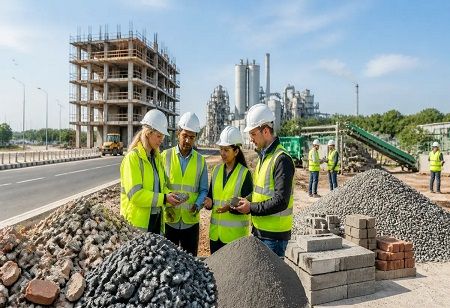
The dialogue focused on identifying technologies that can transform construction and demolition (C&D) waste, steel slag, fly ash, red mud and other industrial residues into valuable construction resources. Participants examined their potential applications in road construction, geopolymer concrete, specialised aggregates and other value-added building materials.
Research initiatives presented by CSIR's Central Road Research Institute (CSIR-CRRI) and Advanced Materials and Processes Research Institute (CSIR-AMPRI) highlighted opportunities to utilise fly ash, copper slag, red mud, plastic waste and steel grit in infrastructure development. The discussions also addressed challenges associated with processing technologies, standardisation, economic viability and market acceptance of waste-derived products.
Another key area of cooperation involved the environmentally safe treatment of hazardous waste through cement kiln co-processing. Experts from SINTEF and CSIR's National Environmental Engineering Research Institute (CSIR-NEERI) examined the potential of cement kilns to treat suitable hazardous materials, including persistent organic pollutants (POPs) and substances contaminated with DDT and polychlorinated biphenyls (PCBs).
The discussions highlighted how controlled high-temperature conditions in cement kilns can destroy hazardous organic contaminants while allowing waste-derived fuels to replace conventional fossil fuels. Experts also emphasised the need for technical protocols, controlled industrial trials, emission monitoring and regulatory compliance to ensure safe operations.
Also Read: Will GST Reforms Create a New 'Sub-₹10 Lakh Tech Car' Segment?
The dialogue identified several priority areas for future India-Norway cooperation. These include preparing two to three joint research proposals, launching pilot-scale demonstration projects for hazardous waste treatment, developing technical guidelines for DDT- and PCB-contaminated waste disposal and advancing waste-derived construction materials. Strengthening industry-academia partnerships was also identified as an important objective.
The initiative builds on the Green Strategic Partnership established between India and Norway during Prime Minister Narendra Modi's visit to Norway in May 2026. The partnership places circular economy, clean technology and research at the centre of bilateral engagement.
Through joint research, technology development and industrial participation, both countries aim to accelerate resource recovery and promote sustainable, resource-efficient practices across the cement and construction sectors.