NASA Invites ISRO to Join Ambitious Moon Base Programme
NASA invites ISRO to join its Moon Base programme as India and the US expand cooperation in lunar exploration, scientific research and human spaceflight technology under the Artemis Accords and broader strategic partnership.
The National Aeronautics and Space Administration (NASA) has invited ISRO to join its Moon Base program. This comes as a big step in India-US collaboration in exploring the Moon and human space flights. The invitation has come as a result of an increasing partnership between the two nations, which have shown great interest in working together for peaceful lunar exploration.
The development comes about as a result of the 9th convening of the India-US Civil Space Joint Working Group (CSJWG), where India will host it on August 5 and 6, 2026, in the ISRO headquarters in Bengaluru. It is a chance for both nations to explore new avenues in civil and commercial space operations.
Also read: Navy Chief Begins 4-Day Mauritius Visit to Boost Maritime Ties
As part of the talks, both India and the US decide to foster cooperation with respect to the sharing of scientific data through the Artemis Accords. Both parties also deliberate on expanding cooperation with regards to scientific research and future collaboration in human space flight technologies. This is an important expansion of cooperation in space beyond satellite programmes and Earth observation programmes.
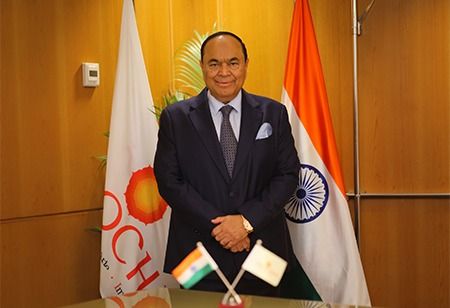
The meeting will be attended by ISRO Chairman & Secretary, Department of Space, Dr. V. Narayanan and US Ambassador to India Sergio Gor at the start of the meeting. The need for increasing the strategic partnership in space, as well as creating chances for cooperative scientific & technological endeavors, is emphasized. The meeting will be chaired jointly by Mr. M. Sankaran, Director of ISRO's UR Rao Satellite Centre and US delegates, Dr. Wesley Brooks & Kathleen Karika.
The dialogues are occurring as part of the larger India-US Transforming the Relationship Utilizing Strategic Technology (TRUST) Initiative that aims at improving collaboration in areas of advanced technology and strategic sectors. It can thus be concluded that the space partnership has become an increasingly critical element of the larger India-US technology relationship.
Both nations assess the progress after the successful launch of the NASA-ISRO Synthetic Aperture Radar Mission (NISAR). It is one of the important successes for the two countries in their space partnership and highlights the potential for future cooperation in Earth observations, science, and advanced space technology.
The meeting also discusses international collaboration in ensuring sustainability of activities conducted in outer space in the long run. India and the US reiterate their dedication towards promotion of such guidelines in the United Nations Committee on the Peaceful Uses of Outer Space (COPUOS).
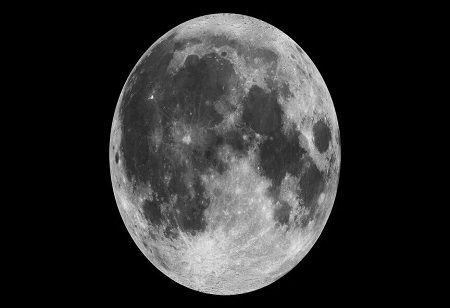
NASA's call for India to join in its Moon Base project is an indication of a very significant new phase in the cooperation between the two in space matters. The NASA project itself is premised on a phased strategy from robotic missions all the way up to a human base on the moon.
Also read: The Future of India's Water Infrastructure
For India, deeper participation in such initiatives can provide opportunities to contribute its growing capabilities in lunar science, spacecraft technology, robotics and human spaceflight. The development also highlights ISRO's increasing role in international space cooperation following the country's achievements in lunar exploration.
Recent talks have revealed that Indian-American collaboration in space is moving from specific missions to more comprehensive collaboration including lunar exploration, science research, commerce in space and technology related to human spaceflight. An alliance on Moon Base may well enhance the relationship and open up fresh avenues for innovation.