Ashwini Vaishnaw Reviews India's First Bullet Train Manufacturing
Ashwini Vaishnaw reviews India’s first indigenous B-28 bullet train at BEML’s Bengaluru facility, highlighting manufacturing progress, structural testing, passenger amenities and domestic high-speed rail capabilities.
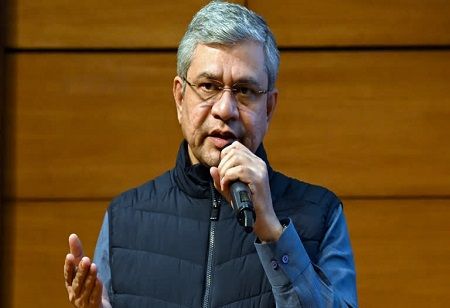
Union Railway Minister Ashwini Vaishnaw reviews the manufacturing progress of India’s first indigenously developed bullet train, B-28, at Bharat Earth Movers Limited’s (BEML) Aditya manufacturing facility in Bengaluru on November 1, 2026. Describing the progress as excellent, the minister highlights the focus on quality, advanced engineering and compliance with international standards.
The high-speed train is being developed for the Mumbai-Ahmedabad High-Speed Rail Corridor and marks a significant step towards strengthening India’s domestic capabilities in high-speed rail technology. During the inspection, Vaishnaw reviews various stages of production, including underframe fabrication, sidewall and roof assembly, carbody integration and surface treatment. He also examines the specialised manufacturing infrastructure and precision-engineered equipment used in the production process.
Also read: Sitharaman Meets Russian Envoy to Discuss Trade and Investment
A key highlight of the inspection is the squeeze test, a quality-assurance procedure that evaluates the train carbody’s structural strength, rigidity and dimensional stability under controlled compressive and tensile forces. The test is particularly important for high-speed operations, where pressure variations can place significant stress on the train structure. The minister also reviews passenger seats, heating, ventilation and air-conditioning systems, couplers and other essential onboard equipment.
The eight-coach B-28 train is designed to accommodate approximately 557 passengers, with seven standard-class coaches and one executive-class coach. It is expected to operate at a maximum speed of 249 kmph, with a test speed of up to 280 kmph. Passenger-focused features include ergonomic seating, charging points, LED lighting, luggage racks, bio-digester toilets, multilingual information displays and Wi-Fi-based infotainment.
The train also incorporates accessibility features such as wheelchair-friendly doors, dedicated seating and toilets for persons with disabilities, level boarding and Braille-enabled signage. Its regenerative braking system is designed to recover energy during braking, while aerodynamic engineering aims to reduce air resistance, turbulence and pressure effects in tunnels.
Also read: Can India Lead the World in Intelligent Machine Manufacturing?
Manufacturing at BEML reflects India's broader push to develop indigenous high-speed rail technology and reduce dependence on imported trainsets. The first prototype is expected to progress towards testing in 2027, with the Mumbai-Ahmedabad corridor serving as its initial deployment project. The development also creates opportunities to strengthen domestic expertise in specialised rail manufacturing, engineering and advanced transportation systems.