India New Zealand FTA to Begin October 20 With Duty-Free Exports
India-New Zealand FTA takes effect on October 20, providing duty-free access for all Indian exports while facilitating $20 billion in investment and expanding opportunities in trade, services and professional mobility.
The India-New Zealand Free Trade Agreement (FTA) will come into force on October 20, 2026, providing duty-free access to New Zealand for 100% of Indian exports from the first day of implementation. Commerce and Industry Minister Piyush Goyal announces the date following the completion of the ratification process by both countries.
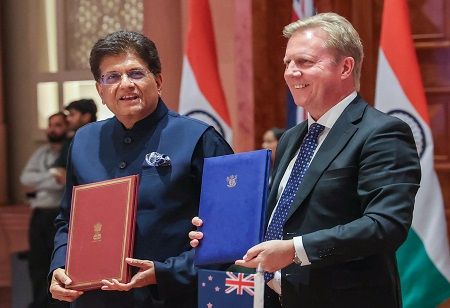
The agreement, signed in New Delhi on April 27, aims to expand bilateral trade and investment while creating a broader framework for economic cooperation. Negotiations conclude in December 2025 after five formal rounds, with talks beginning in March 2025. New Zealand’s Parliament approves the legislation required to implement the pact on September 16, followed by completion of the remaining ratification procedures.
Also read: Nexperia Partners With Tata After Fallout With Chinese Parent
Under the agreement, Indian exporters receive zero-duty access across all tariff lines in the New Zealand market. The arrangement covers sectors including textiles and apparel, leather and footwear, engineering goods, pharmaceuticals, agriculture and processed food products. The government says the agreement helps address the tariff disadvantage faced by Indian exporters in the New Zealand market.
New Zealand also receives expanded access to the Indian market. Around 95% of New Zealand’s current exports by value will become tariff-free or receive significantly reduced tariffs, with more than half of its exports receiving full tariff elimination from the first day and more than 80% after the agreement is fully phased in. Sensitive Indian sectors, including dairy and several agricultural products, remain protected through exclusions and other safeguards.
Investment is another major component of the pact. New Zealand commits to facilitating USD 20 billion in investment into India over 15 years, while the agreement also establishes cooperation in areas such as agricultural productivity, technology, pharmaceuticals, medical devices and trade facilitation.
Also read: The Future of India's Water Infrastructure
The FTA further introduces provisions covering services, professional mobility, students and youth mobility. These measures are intended to expand opportunities for Indian professionals and students in New Zealand while strengthening people-to-people and business links between the two countries.
India and New Zealand have also set a target of doubling bilateral goods and services trade by 2030. Current bilateral trade stands at around $2.3 billion, according to recent reports. With the FTA entering into force in October, both countries are seeking to expand market access, investment flows and wider economic engagement.