PM Modi Reviews ₹30,000 Crore Infra Projects at PRAGATI
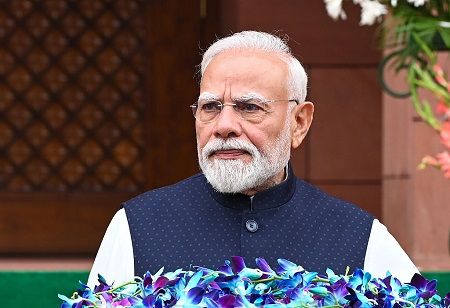
Prime Minister Narendra Modi reviews six infrastructure projects worth over ₹30,000 crore at the 53rd PRAGATI meeting, stressing timely execution, inter-agency coordination, integrated planning and faster removal of implementation bottlenecks.
The meeting of the 53rd PRAGATI chaired by Prime Minister Narendra Modi, was held at Seva Teerth, discussing the status of six critical infrastructural projects from the Railways, Road, and Power Sectors. These projects belong to nine different states and entail an investment worth more than ₹30,000 crore.
PRAGATI is an ICT-based multi-mode platform through which the Central government engages with states for large infrastructure projects and policies to be implemented. In the most recent discussion, the Prime Minister evaluates the status of the chosen infrastructure projects and highlights the need for proper coordination amongst the Ministries/Departments as well as the state governments.
Also read: West Asia Crisis Delays Clean Energy Projects by Up to 4 Months
These are some of the projects which are deemed crucial in enhancing connectivity, economic activities, and services. Modi instructs his subordinates on the need for strict observance of project schedules and solving any outstanding issues through coordinated effort. He says that there is more than the financial cost involved in delays of such projects since it means delays in providing benefits to the citizenry and economy.
The Prime Minister appeals to treat infrastructure projects as a system as opposed to individual components or packages. The Prime Minister asks for an end-to-end perspective in handling projects as well as identifying crucial gaps which may affect the commissioning of the projects.
The first point that is focused on during the conference is the aspect of ownership. Modi wants a proactive work culture that should be seen among ministries and state governments, where the officials themselves identify the issues that could arise in the future and sort them out even before they result in serious delays.
Furthermore, the Prime Minister draws attention to the possibilities offered by common utility corridors for infrastructural services wherever feasible from a technical and economic perspective. He believes that such an infrastructural plan should be taken into consideration at the very beginning of the design process for major transport projects and other infrastructural projects as well.
Integrated planning has become an important aspect that complements the government's strategy of development through infrastructure projects where connectivity is seen as an intermodal endeavour. Efficient coordination in terms of road and rail networks, along with the electrical and other public utility works, can contribute to greater economic activity.
The recent PRAGATI review also emphasises the government's focus on time-bound infrastructure delivery. Through periodic monitoring of key projects and overcoming issues between the government and other agencies, PRAGATI aims to minimise delays in implementation.
Also read: How Renewable Energy is emerging as India's Next Big Jobs Engine
This review comes at a time when the government continues its tight supervision of the large pipeline of infrastructure projects in India. Meanwhile, the Ministry of Statistics & Programme Implementation is tracking 1,775 central sector infrastructure projects worth a revised ₹37.11 lakh crore under its PAIMANA system as of July 2026.
The 53rd meeting of PRAGATI therefore clearly reflects that the government is determined to further improve the process of infrastructure delivery by planning and monitoring the same. These proposed projects are likely to result in better connectivity and economic activities in the nine states.