Uzbekistan Eyes USD 2 Billion Trade Target With India
Uzbekistan has invited Indian companies to invest in its mining, critical minerals, and rare earths sectors, while setting a target to increase bilateral trade with India to US$2 billion by 2027. The country is also seeking deeper collaboration in renewable energy, chemicals, pharmaceuticals, and automotive manufacturing.
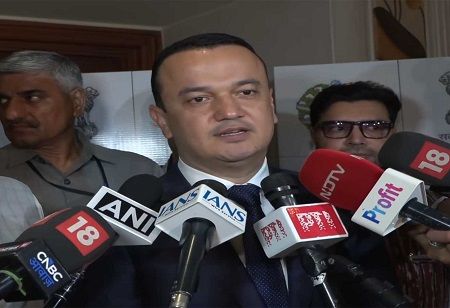
Uzbekistan has invited Indian companies to expand investments in its mining and metallurgy sector, highlighting opportunities in gold, copper, uranium, critical minerals, and rare earth elements. Speaking at the India-Uzbekistan Business Forum in New Delhi alongside Union Commerce and Industry Minister Piyush Goyal, Uzbekistan's Minister of Investment, Industry and Trade, Laziz Kudratov said the country is keen to attract Indian technology, expertise, and capital to develop value-added mineral processing industries and strengthen bilateral economic cooperation.
Kudratov noted that Uzbekistan ranks among the world's leading countries in reserves of gold, copper, and uranium, while also possessing significant deposits of critical minerals and rare earth elements. He invited Indian companies to participate in projects covering steel production, deep processing of copper, and rare earth metals, aligning with Uzbekistan's broader strategy to build higher-value manufacturing capabilities instead of exporting raw materials.
Also Read: How Intelligent Battery Sensors Improve EV Battery Accuracy
The minister highlighted the rapid growth in bilateral trade, which crossed US$1.3 billion after expanding by around 30% last year. Uzbekistan now aims to raise trade with India to US$2 billion by next year, with a longer-term objective of reaching US$3–5 billion through stronger investment and industrial partnerships. Around 400 Indian companies currently operate in Uzbekistan, with a combined project portfolio exceeding US$5 billion.
Beyond mining, Uzbekistan identified several sectors for enhanced collaboration, including chemicals, renewable energy, pharmaceuticals, and automotive manufacturing. The country invited Indian fertiliser manufacturers to expand production facilities in Uzbekistan for both domestic consumption and exports to third-country markets. It also encouraged partnerships in solar and wind energy, battery storage, and data centres as it works towards increasing the share of renewable energy in its electricity mix to 54% by 2030.
In the pharmaceutical sector, Uzbekistan called on Indian companies to establish joint manufacturing facilities for medicines and vaccines, building on existing collaborations with Indian firms. The government also invited automotive component manufacturers to localise production, leveraging Uzbekistan's growing vehicle manufacturing ecosystem, which includes facilities operated by General Motors, BYD, and Kia.
Also Read: How Policy, Technology and Exports are Redefining Indian Manufacturing
The investment outreach reflects the growing strategic partnership between India and Uzbekistan, supported by efforts to improve market access, reduce trade barriers, and strengthen industrial cooperation. With both countries exploring deeper economic integration, including the possibility of a future free trade agreement, the proposed collaborations are expected to enhance supply chains, boost bilateral investment, and support long-term growth across critical sectors.