BRICS Anti-Corruption Meeting Focuses on Tech Cooperation
The 2nd BRICS Anti-Corruption Working Group Meeting in Hyderabad focuses on technology integration, asset recovery, and stronger cross-border cooperation to combat corruption, trace fugitive offenders, and enhance transparency among member nations.
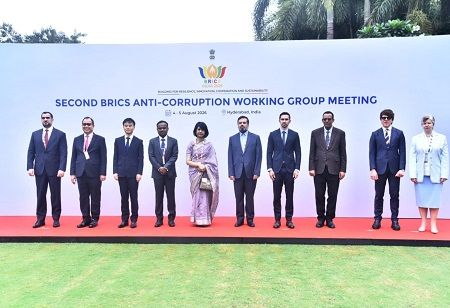
Second Meeting of BRICS Anti-Corruption Working Group (ACWG) is being organized by India in Hyderabad under its BRICS Presidency 2026, and the participating countries have shown great importance to technology integration and cooperative actions in fighting corruption and financial crimes. The two-day meeting will be organized on the theme “Building for Resilience, Innovation, Cooperation and Sustainability,” which would include the Second Meeting of BRICS Expert Network on Asset Recovery as well.
These meetings aim at promoting international cooperation in identifying economic criminals who are fugitives, extradition, asset recovery, and sealing the gaps which make it easy for criminals and their money to move across international borders. The delegates emphasize that the problem of corruption has become highly complex and international. It therefore calls for better laws, information exchange, and cooperation among law enforcement agencies. Technology-based solutions such as computer applications and data sharing have been highlighted as important means to achieve this goal.
Also read: Uzbekistan FM Begins India Visit for Key Bilateral Talks
Speaking at the meeting, Rachna Shah, the Secretary of the Department of Personnel and Training (DoPT), emphasizes that corruption continues to be a major impediment to sustainable and inclusive growth because corruption results in the diversion of public resources to other areas which are not as important, including health, education, and infrastructure. She advocates for increased BRICS cooperation to make sure that there is no jurisdiction where these fugitives can hide.
Other areas that are discussed include ways of improving measures related to asset tracking, seizures, and repatriations, and using emerging technologies in order to promote transparency and develop financial intelligence. It is important to mention that the conference emphasizes the need for legal harmonization, exchange of good practices, and institutional development needed to combat financial crimes efficiently. Collaboration between anti-corruption agencies will help to make investigations more effective and increase confidence in governance systems.
This conference is consistent with the overall themes for India as the chair of BRICS, where innovation, resilience, and cooperation are key pillars of multilateralism. Through the adoption of technology and institutional collaboration, India hopes to build up the capacities of the BRICS countries in combating corruption and economic crimes that have become transnational in nature.
Also read: How Energy Ecosystems Are Reshaping India's Manufacturing Edge
Outcomes from this Hyderabad summit are expected to help in achieving an improved anti-corruption regime in BRICS through increased expertise exchange, better collaboration between investigation agencies, and utilization of technology in law enforcement efforts. It is recognized that continued cooperation, innovation, and implementation of commitments under international agreements will be key in fighting corruption and promoting sustainable economic growth in member nations.