First SCO Civilisational Dialogue Forum Concludes in Delhi
The first SCO Civilisational Dialogue Forum concludes in New Delhi with the Indraprastha Communiqué, promoting heritage preservation, cultural exchanges, academic partnerships and responsible AI adoption.
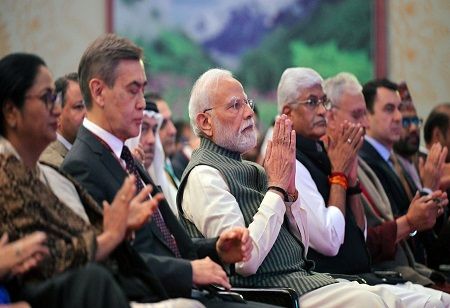
The first Shanghai Cooperation Organisation (SCO) Civilisational Dialogue Forum concluded in New Delhi on November 22, 2026, with participating countries reaffirming their commitment to strengthening cultural ties, preserving shared heritage and promoting people-to-people exchanges. The three-day forum, inaugurated by Prime Minister Narendra Modi on November 20 at the historic Purana Qila, brought together 116 delegates from 22 countries, including four ministers and SCO Secretary General Nurlan Yermekbayev.
Jointly organised by India's Ministry of Culture and Ministry of External Affairs, with the Indira Gandhi National Centre for the Arts (IGNCA) as its knowledge partner, the forum provided a platform for representatives to discuss historical connections and explore opportunities for cultural collaboration across the SCO region.
Also Read: Home Renovation Trends and Material Choices across Urban India
During the inaugural session, Modi highlighted the importance of civilisational dialogue in promoting peace, mutual understanding and trust among nations. He referred to India's historical connections with Central Asia, China, Southeast Asia and the wider Eurasian region, established through trade, scholarship, spiritual journeys and the exchange of knowledge. He encouraged participating countries to strengthen these connections through digital technologies, artificial intelligence, manuscript digitisation, collaborative research, academic exchanges and cultural tourism.
The second day featured discussions on civilisational and cultural expressions, including artistic and architectural exchanges among SCO nations. Participants examined historical connections through Buddhist art, Silk Route exchanges, Indo-Persian influences and maritime trade. The sessions also highlighted heritage conservation, institutional partnerships and digital documentation.
The concluding day focused on language, literature, scripts, manuscript traditions and religious and philosophical connections. Discussions explored approaches to preserving cultural resources and strengthening exchanges among scholars, institutions and communities.
An important outcome was the preparation of the Indraprastha Communique, outlining areas of convergence for continued cultural cooperation. It emphasised respect for civilisational diversity, protection of cultural heritage from illicit trafficking and environmental threats, joint exhibitions, institutional collaborations and exchanges of artists, scholars and students. It also encouraged the responsible use of artificial intelligence to improve access to cultural heritage while maintaining accuracy and contextual integrity.
Also Read: Eco-Friendly Material Engineering to Replace Traditional Plastic
The forum reaffirmed the importance of sustained cultural engagement in strengthening relationships among SCO member countries and connecting their shared historical experiences with contemporary cooperation opportunities.