Indian Startup Unveils Indigenous Turbofan Engine Program
Synopsis: Paninian India launches the indigenous Yantur 4.5 kN Turbofan Engine Programme to power next-generation cruise missiles and autonomous defence platforms, strengthening India's private-sector aerospace capabilities and advancing the Aatmanirbhar Bharat vision.
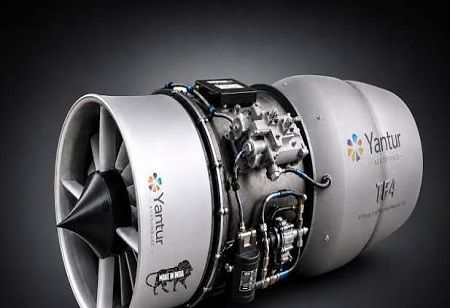
Yantur 4.5 KN Turbofan Engine Programme from Paninian India Pvt. Ltd. is a milestone that India has reached in terms of self-reliance in its aerospace and defence industry. This program has been launched by a Bengaluru-based deep tech firm to develop a capability in the country for turbofan propulsion for use in long-range autonomous defence vehicles. The program will be in line with the Aatmanirbhar Bharat vision of the Government.
The Yantur engine is an engine currently under development that will serve as the power plant for the company’s new long-range, autonomous cruise missile known as the Svayatt L1. The engine is said to be a turbofan engine capable of producing 4.5 kN of thrust. The engine’s design is expected to offer reliable propulsion for strike systems while offering a scalable approach for higher-thrust engines.
Also read: Tamil Nadu Tops India in Tech Investment Readiness
One of the goals of the program is to develop an indigenous propulsion ecosystem within the Indian private industry. The turbofan engine technology is still considered as one of the most difficult and significant segments within the field of aerospace engineering, and its local development is supposed to enhance India's ability to rely on its own technology. With the design and production of propulsion systems in India, Paninian India aims at contributing to the robustness of the defense industrial base.
According to the company, the engine is designed with modularity and scalability features that facilitate future improvements in order to satisfy any operational requirement changes. With these features, the platform can be used to provide assistance to more advanced autonomous systems due to changing needs of India’s defence. Another important aspect of this program is its compatibility with measures to involve the private sector in defence development and manufacturing.
The purpose of raising such a large sum of money is to speed up the testing and validation of the engine. The funds would be used for prototype construction, ground testing, and certification of the engine prior to its use. According to Paninian India, this initiative will enable it to develop a sustainable domestic capability in compact turbofan engines.
Also read: Smart Buildings and IAQ Trends Shaping the Workplaces of Tomorrow
According to industry specialists, the introduction of the Yantur program represents an important move that will facilitate the progress of indigenous aerospace technology in India. With increasing demands for independent defense systems, the successful creation of a small turbofan engine can help India gain expertise in developing new-generation missile and drone technologies as well as ensure its goal of self-sufficiency in essential defense equipment.